


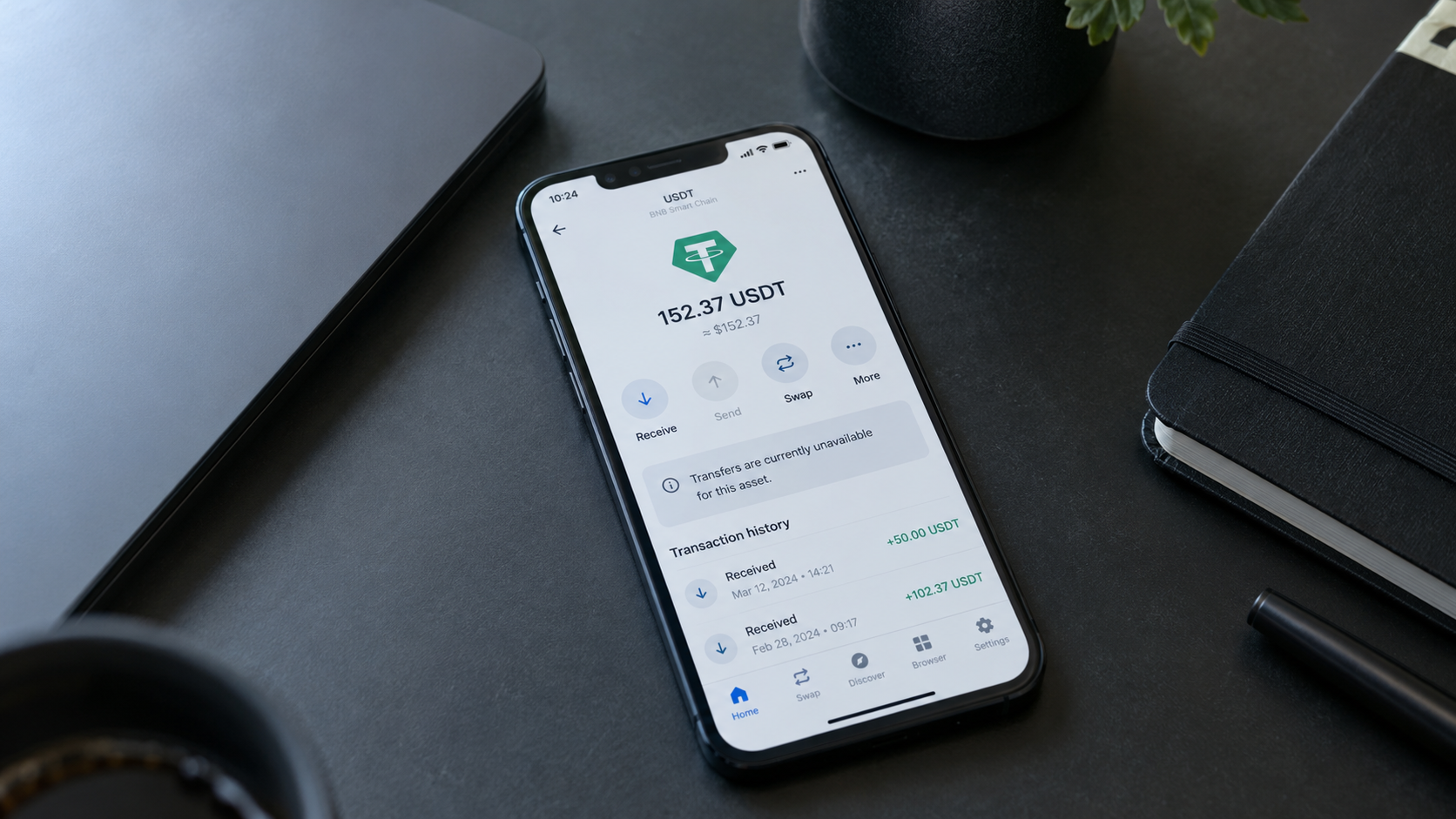
“Trust Wallet has blocked funds”, “I can’t withdraw USDT” or “cryptocurrency is displayed, but not transferred” - this is how users often describe seemingly similar, but technically different situations. In one case, the transaction simply does not have enough TRX, ETH, BNB or SOL to pay the fee. In another, someone else’s address is added to the app in watch-only mode, a fake token is displayed on the balance, or real assets have already been withdrawn by the attacker. A separate scenario is the actual restriction of USDT transfer at the level of the issuer’s smart contract.
Therefore, an attempt to “unlock” a cryptocurrency without prior verification may not solve the problem, but may lead to additional losses. It is especially dangerous to transfer funds to persons calling themselves Trust Wallet support and demanding to pay tax, security deposit, AML certificate or make a “mirror payment”.
In this article, we explain whether Trust Wallet can block a cryptocurrency, how to check the real balance and status of USDT, how AML risk differs from the actual freezing of tokens, and how ProDefence determines the reason for the restriction in a particular case.
Short answer. Trust Wallet is a self-custody, or non-custodial, crypto wallet: private keys are controlled by the user, not the service. Therefore, as a general rule, the app generally cannot unilaterally block native assets on your blockchain address. However, a transaction may fail due to a insufficient network fees, a network error, the absence of a private key, a risky transaction, smart-contract restrictions, or the token being frozen by its issuer. Also, the balance may be fake or not belong to the user at all.
Why cryptocurrency may appear in Trust Wallet but cannot be transferred
First you need to separate the mobile application interface from the blockchain itself. Trust Wallet shows address data and allows transactions to be created and signed, but the final state of the assets is determined by the records of the corresponding blockchain network. If the app displays a certain amount, this does not prove that the user owns genuine tokens and has the key to manage them.
The address does not have enough TRX, ETH, BNB or SOL for network fees
To transfer a token, the network's native coin is required. For example, to send USDT TRC20 you need TRON network resources or a sufficient amount of TRX, for USDT ERC20 - ETH, for tokens in BNB Smart Chain - BNB, and in the Solana network - SOL. Having a large USDT balance does not mean that fees can automatically be deducted in USDT.
In this case, the cryptocurrency is not blocked: the blockchain simply does not accept the transaction without paying a network fee. At the same time, the requirement of an unknown person to deposit a significant percentage of the balance has nothing to do with the usual network fee. Before replenishing the address, you need to check whether the token is real and whether the user owns the private key.
Wrong network or unsupported transfer route selected
USDT exists on different blockchain networks. The same asset name does not make USDT TRC20, ERC20, BEP20 or USDT in Solana interchangeable within the same transaction. If the user has chosen a different network, the asset may not appear in the expected section or may be listed on an exchange that does not support the appropriate deposit standard.
You need to check not only the recipient's address, but also the network, contract address and transaction status according to TxID. If the transfer is already confirmed by the blockchain, Trust Wallet cannot reverse it. Further actions depend on who controls the recipient's address and whether the service supports the recovery of erroneous deposits. See alsohow to check a transaction by TxID.
An address in watch-only mode has been added to Trust Wallet
Watch-only wallet allows you to monitor the balance and transactions of any public address, but does not contain a private key for signing transfers. Fraudsters may offer to import such an address, show a significant amount of money on it and claim that in order to gain access you need to pay a fee, tax or “activate” the wallet.
No top-up will provide a private key to someone else's address. The funds that the user transfers for supposed unblocking can be immediately withdrawn by the owner of the address. Trust Wallet separately warns about fraudulent schemes with watch-only wallets and false promises to open access to someone else’s balance.
The balance shows a fake USDT or other fictitious token.
Anyone can create a token with the name USDT, a logo, a similar symbol, and an arbitrary number of decimal places. The name of the token does not confirm its connection with Tether. In some schemes, the user is sent a fake asset, the app shows a large number of units, and the scammer claims that their value will be available after an additional payment.
To verify, it is necessary to compare the address of the smart contract with the official address of the token in a specific network, analyze the owners, liquidity, transaction history and whether the token can be transferred or sold. Zero liquidity, an atypical contract name, lack of transactions on known platforms, or a ban on sales may indicate a counterfeit or fraudulent token.
The smart contract or security system rejects the transaction
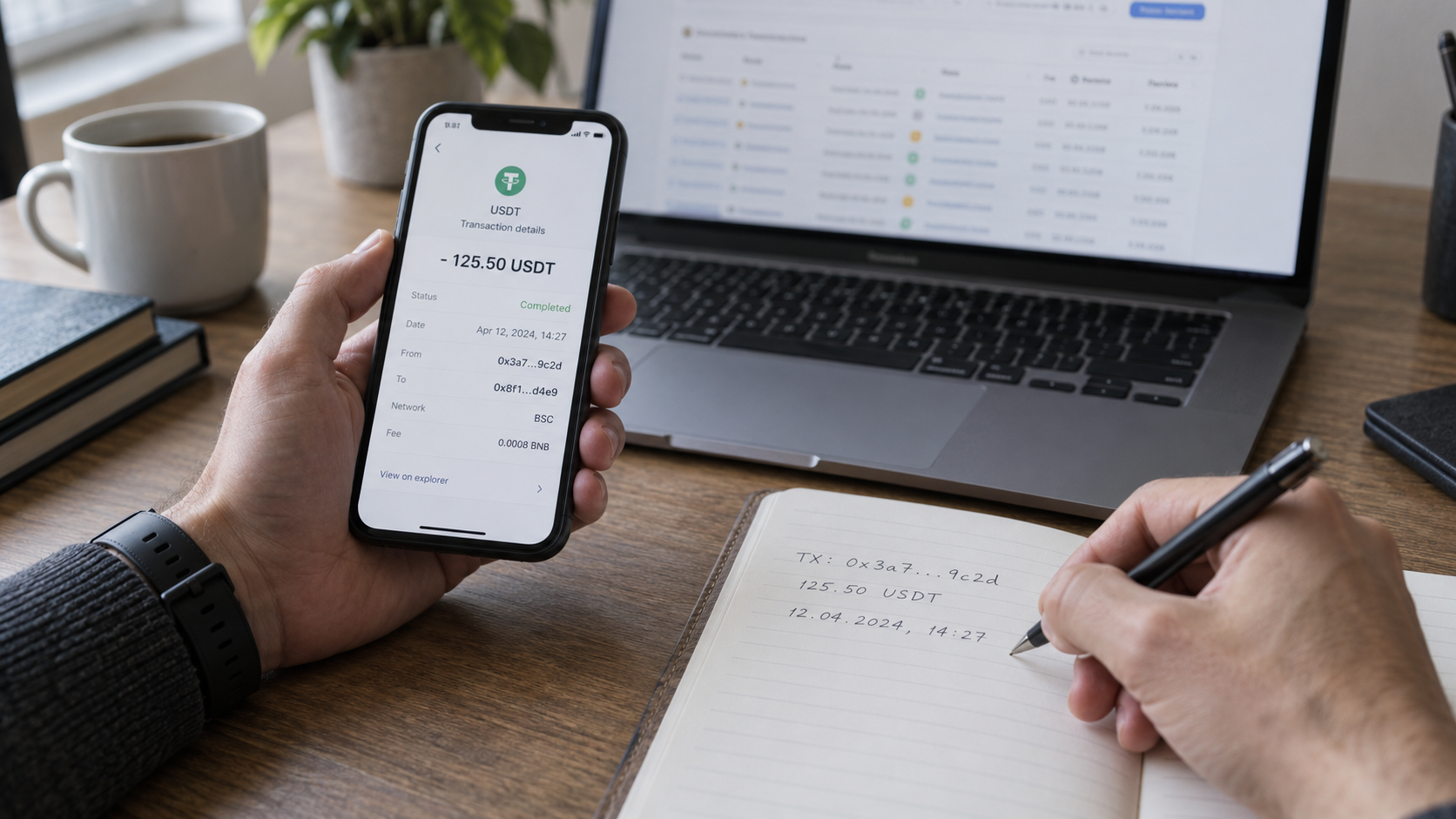
A simulation error, contract failure, or risky interaction does not always mean the entire wallet is blocked. The reason could be a limitation of the token itself, an insufficient gas limit, incorrect operation parameters, a temporary problem with the RPC node, a faulty dApp, or an attempt to interact with a dangerous contract.
Also, do not ignore the built-in Trust Wallet Security Scanner warning. It may refer to a suspicious address, a malicious contract, or a dangerous permission. Trying to bypass the warning on a third-party manager’s instructions is risky: a signed transaction may give the attacker the right to spend tokens.
USDT frozen by issuer at smart contract level
Unlike BTC, ETH, TRX or other native coins, centrally issued stablecoins may contain address restriction features. In the case of USDT, the restriction is implemented at the token contract level, so frozen units may remain visible at the address, but they will not be transferred.
This does not mean that Trust Wallet blocked the money. The application only displays an asset whose transactions are restricted by the rules of the contract. This limitation cannot be circumvented by reinstalling the application, importing the seed phrase into another wallet, or paying a fee to an unknown intermediary. The first step is to confirm the status of the address, determine the probable cause, and determine the appropriate channel of communication with the issuer or competent authorities.
Assets have already been withdrawn from the compromised wallet
If unauthorized persons obtain the seed phrase, private key or access to the device, they can sign the transfer without additional confirmation from the owner. Another option is that the user signed a malicious Approve or transaction while interacting with a phishing site. In this case, it is necessary to check the history of transactions, recipients, permissions of smart contracts and further movement of assets.
Reinstalling Trust Wallet does not return the already sent cryptocurrency. If the assets have left an address, the main tasks are to preserve evidence, stop further losses, on-chain tracking of funds and prompt identification of services that may have received them.
Transfer from Trust Wallet was blocked by the exchange or exchange service
Sometimes a transaction successfully exits Trust Wallet and is confirmed by the blockchain, but the exchange does not credit the deposit or limits withdrawal from the account. This is not a wallet-level block. The reason could be a network or memo error, a technical verification of the deposit, an AML/KYC procedure, a request for the origin of funds, or a platform-level restriction. See also a blocked exchange account andconfirming Source of Funds.
In such a situation, it is necessary to check TxID, the correctness of the deposit address, the number of confirmations and the status of the transaction, then analyze the requirements of the exchange. If the platform requests Source of Funds, the response must be consistent and supported by documents and data.
How to distinguish the root causes
A balance is shown, but the transfer cannot be signedWatch-only address or no private keyThe imported wallet type and whether the user lawfully controls the key
USDT is shown, but no transaction can be createdNo native coin for network feesThe TRX, ETH, BNB or SOL balance on the relevant network
A large amount of an unknown asset is shownFake token or interface manipulationThe contract address, liquidity and actual market value
Genuine USDT is held at the address, but every transfer failsSmart-contract restriction or blacklistThe address status in the token contract and blockchain data
The balance fell without the owner’s knowledgeKey compromise, phishing or malicious approvalOutgoing transactions, contract permissions and recipient addresses
The transaction is confirmed, but the exchange did not credit the depositTechnical or AML/KYC review by the exchangeThe TxID, network, deposit address, memo and support request
A tax, insurance charge or “mirror payment” is demandedLikely fraudWhether the balance is genuine, plus the domain, contacts and payment address
Get a consultation
A quick case assessment — no obligation
How ProDefence checks for blocked funds in Trust Wallet
A proper investigation begins not with attempting to resend the token, but with identifying the asset, network, and address. ProDefence analyzes technical, transactional, AML and legal factors together. This allows you to separate normal user error from a real smart contract limitation, wallet compromise, or a fraudulent simulated balance.
Checking real balance and transactions in the blockchain
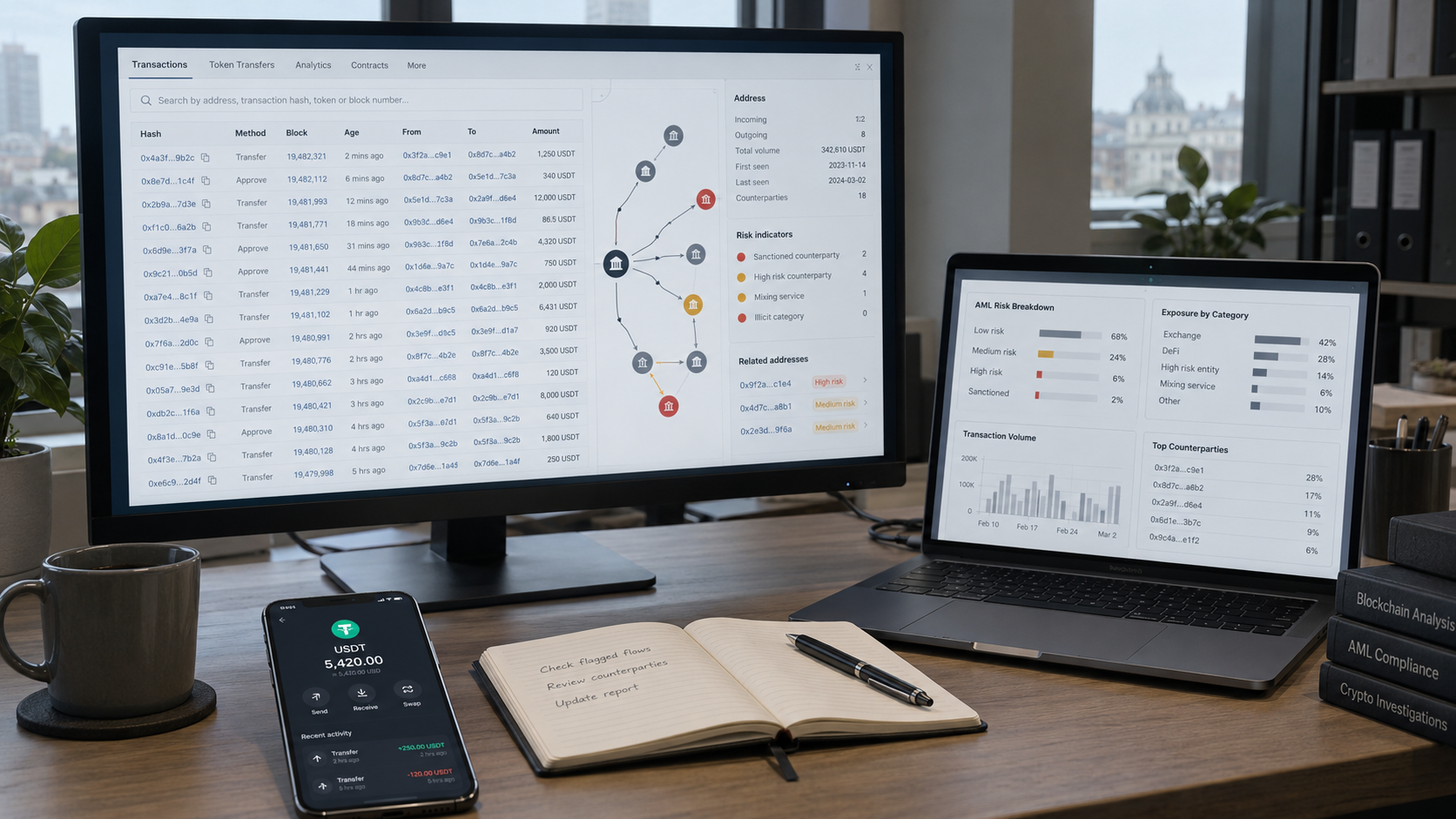
The screenshot of Trust Wallet is only preliminary evidence. The specialist checks the public address in the corresponding blockchain network and establishes the actual balance, asset composition, history of incoming and outgoing transactions, status of recent transactions and interaction with smart contracts. If the client provides TxID, then the sender, recipient, amount, token, network, fee, execution result and contract events are checked.
Such a check immediately answers basic questions: whether the declared assets exist on the blockchain, whether they are held at the client’s address, whether the transaction has been confirmed and whether the funds have been moved before. It also allows you to identify discrepancies between information in the application, manager messages and objective network data.
Token identification and smart contract analysis
For tokens, not only the name is checked, but first of all the contract address. ProDefence compares it with the official data of the issuer, analyzes the parameters of the asset, history of creation, distribution, liquidity and behavior of the contract. This helps determine whether an asset is real USDT, a copy token, a honeypot, or another tool of a fraudulent scheme.
If the operation does not go through, the reasons for the rejection are analyzed: an insufficient network fee, incorrect parameter, prohibition of transfer, contract pause, blacklist or other logic laid down by the developer. The conclusion is made based on the actual behavior of the contract, and not just the text of the error in the application.
Checking the blacklist and actual freezing of USDT
If the address contains genuine USDT, it is checked to see if there is a token level restriction. It is important to distinguish between an actual freeze and a high-risk mark in the AML system. The risk category in the analytical service does not in itself block a transaction on the blockchain. It may influence the decision of the exchange, exchange service or other VASP, but the technical restriction of the transfer must be separately confirmed.
If blacklisting is confirmed, the history of receipt of tokens is additionally examined, the address may be linked to the incident, and documents on the legal origin of funds are available. No outside expert can independently change the state of the Tether contract. The task of ProDefence is to establish the facts, prepare reasoned materials and determine a realistic course of further action.
AML address analysis and cryptocurrency origin
AML verification is required when the restriction may be related to the history of the assets or when the exchange requests an explanation of their origin. The analysis includes direct and indirect connections of the address with risk categories, in particular fraud, theft, sanctioned entities, mixers, illegal services, phishing addresses and other sources of increased risk. Read more:how to check USDT for “purity”.
In this case, not only the overall risk score is assessed. The amounts, the share of risk exposure, the number of transaction steps, dates of operations, the economic logic of the movement of funds, interaction with well-known services and possible erroneous attributions are taken into account. The output of an AML tool should not mechanically replace professional analysis.
If you need to confirm Source of Funds, on-chain data is matched against contracts, exchange statements, receipts, asset purchase history, P2P transactions, tax documents and other materials. The goal is to formulate a coherent explanation that does not contradict the movement of funds in the blockchain.
Checking your wallet for compromise and malicious permissions
If funds were withdrawn without the owner's explicit consent, the outgoing transactions, interactions with the dApp, signed messages, permissions to spend tokens, and contract addresses are checked. It is important to determine whether a private key was used, whether assets were debited through a previously provided Approve, or whether the user signed a malicious transaction under the guise of verification, receiving a bonus or unlocking funds.
Next, the movement of stolen assets is analyzed: consolidation to other addresses, exchange through DEX, use of bridges, network changes, interaction with exchange services, exchanges, payment providers or privacy tools. Establishing an entry point to a centralized service early can have be important for subsequent requests and data preservation.
Analysis of tax, insurance or release requirements
ProDefence separately checks communication with persons claiming to represent support, brokers, AML specialists or blockchain representatives. Domains, email addresses, messenger profiles as well as the documents, cryptocurrency addresses and stated payment mechanism they provide.
Trust Wallet does not require the transfer of a “mirror amount” to confirm ownership. The seed phrase should also not be shared with support, a lawyer, an analyst, or any other person. Taxes are not paid by transferring cryptocurrency to a random private address at the direction of the manager. If after each payment a new fee is demanded, this is a typical sign of advance-fee fraud.
Typical situations identified during a review
Situation 1 – the balance is only in the interface. The client sees a significant amount and is told to top up the address to unblock it. The check shows that a watch-only address or token with a name similar to USDT has been added to the application. The user does not have a private key, and the stated value of the asset is not confirmed by liquidity.
Situation 2 – the real USDT is located at the address. In this case, the network fee, simulation result, contract functions and address status are checked. Only then can a technical error be distinguished from an actual transfer restriction.
Situation 3 – assets have already been moved. Old information or a fake token may remain in the application, while the real cryptocurrency was withdrawn after compromising the seed phrase or signing a harmful permission. In this case, the further movement of funds is traced and the services used by the attacker are identified.
ProDefence verification methodology. Conclusions are formed based on public blockchain data, analysis of smart contracts, transaction activity, AML tools, address attribution, documents on the origin of funds and communication materials. Each fact is verified in the context of a specific network and operations. The presence of one risk indicator is not used as automatic evidence of fraud, criminal origin of assets or the actual freezing of a token.
What to do if funds in Trust Wallet are blocked or stolen
The course of action depends on the identified reason, but the first steps are the same in most situations: do not make new payments under duress, save transaction information and verify the address directly on the blockchain. The sooner TxIDs, addresses and correspondence are preserved, the lower the risk of losing data important for further analysis.
Do not transfer money for “unblocking” without verification
Do not pay tax, security deposit, AML fee, activation code or “mirror payment” to an address sent by an unknown manager. Don't fund your watch-only wallet in hopes of getting your private key. If someone offers to release USDT in exchange for an advance payment, first check the validity of the asset and the credentials of the payee.
Save the address, TxID, screenshots and correspondence
Record the public address of the wallet, the name of the token, the network, TxID of recent operations, the text of the error and the time it occurred. Save complete correspondence with support or manager, emails, phone numbers, usernames, domains, files and payment details. Don't crop screenshots so that the date, page address, or message context disappear.
Do not share your seed phrase and private key with anyone.
For initial blockchain verification, a public address and TxID are enough. ProDefence does not require transmitting a seed phrase or private key. If this data has already been entered on a third-party site, sent to another person, or stored on a compromised device, the wallet should be considered compromised.
If there are assets that can be transferred, a new wallet is created in a secure environment and the transfer of funds is scheduled. The course of action should be chosen carefully: an active attacker or an automatic sweeper can monitor the funding of the address with a native coin for network fees.
Check and revoke dangerous permissions
If the problem occurs after connecting to a dApp, participating in an airdrop, staking, “verification,” or signing an unknown operation, you need to check active smart-contract permissions. Revoking an approval may stop further token withdrawals, but does not return assets already transferred.
Contact the exchange, service or issuer through the official channel
If on-chain analysis has detected the arrival of assets at a centralised exchange, exchange service or payment provider, it is necessary to record the corresponding transactions and contact the service. The specific procedure depends on its rules: the platform may require a request from the victim, investigation materials, or a request from a law enforcement agency.
If the actual freezing of USDT is confirmed, the interaction is not with random Trust Wallet support, but through official channels and taking into account the reasons for the restriction. Paying funds to a third-party intermediary does not change the status of the address in the smart contract.
Prepare materials for law enforcement agencies
If there are signs of fraud, theft or unauthorized access, it is advisable to add a structured description of events, a list of addresses and TxID, amounts of assets, networks, information about recipients, screenshots and results of blockchain analysis in a report to law enforcement. A simple reference to an address without an explanation of the transaction chain often does not provide a complete picture of the incident.
Frequently Asked Questions
Can Trust Wallet block my account?
Trust Wallet works as a self-custody wallet and does not use a classic deposit account, on which the service stores all user assets. However, certain functions of the app or third-party providers may not be available, and the token or address may have restrictions at the smart contract or other service level.
Trust Wallet works as a self-custody wallet and does not use a classic deposit account, on which the service stores all user assets. However, certain functions of the app or third-party providers may not be available, and the token or address may have restrictions at the smart contract or other service level.
Can USDT be blocked on a non-custodial or cold wallet?
Yes, if the functionality of a specific USDT contract on the relevant network allows the issuer to restrict addresses. Changing the application or device does not override the token-level restriction.
Yes, if the functionality of a specific USDT contract on the relevant network allows the issuer to restrict addresses. Changing the application or device does not override the token-level restriction.
Does high AML risk mean that USDT is already frozen?
No. AML risk is an analytical assessment of the history of an address or assets. Actual freezing is a separate technical condition that must be confirmed using contract data and the blockchain.
No. AML risk is an analytical assessment of the history of an address or assets. Actual freezing is a separate technical condition that must be confirmed using contract data and the blockchain.
Can USDT be unlocked through another wallet?
If it's just an interface issue, accessing the same address through a compatible app can sometimes help create a transaction. But another wallet does not bypass the blacklist, does not provide a private key to the watch-only address, and does not turn a fake token into a real one.
If it's just an interface issue, accessing the same address through a compatible app can sometimes help create a transaction. But another wallet does not bypass the blacklist, does not provide a private key to the watch-only address, and does not turn a fake token into a real one.
What information can be safely provided for verification?
Public address, TxID, network name, error screenshot and description of events. The seed phrase, private key and wallet backup file must not be shared.
Public address, TxID, network name, error screenshot and description of events. The seed phrase, private key and wallet backup file must not be shared.
Trust Wallet and blocking of funds
There is a balance, but USDT or other cryptocurrency cannot be transferred?
Send the public address, network, TxID and a screenshot of the error. ProDefence specialists will check the real balance in the blockchain, the authenticity of the token, blacklist, AML risks and possible theft of assets without access to the seed phrase.
Confidential. Without unfounded promises of “one-click unlock”.


