


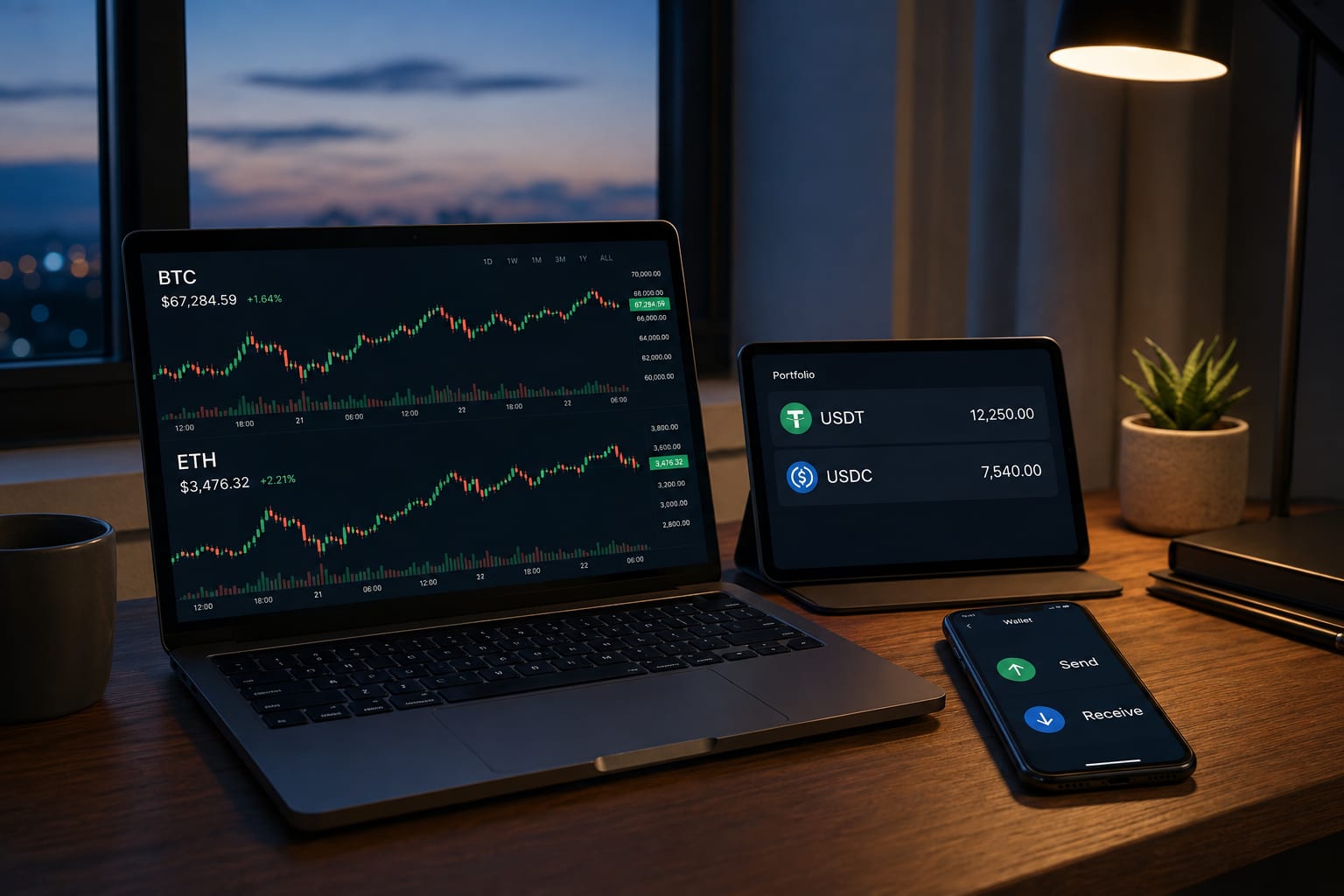
USDT is widely used for P2P settlements, international transfers, storing value, and paying for goods or services. The same token name does not mean the same level of risk. Two USDT amounts can have the same face value but different histories: one arrived from a regulated exchange, another through a chain of addresses linked to fraud, asset theft, sanctioned parties, or higher-risk services.
That is why, before a large operation, it is sensible to check not only the counterparty’s balance, but also the origin of the assets. This is especially important for business, exchange operations, P2P agreements, accepting payment, and later depositing cryptocurrency to a centralised exchange.
The phrase “clean USDT” is informal. On the blockchain there is no official permanent mark that classifies an asset as clean or dirty. In practice the question is a risk assessment of a specific address and transaction chain as of the time of the check.
What an AML check of USDT shows
AML analysis helps establish which categories of addresses a wallet interacted with, where the assets came from, and whether known risk factors exist. This uses blockchain data, sanctions lists, public incident reports, and professional address-labelling systems.
A review may examine:
- direct receipts from sanctioned or blocked addresses;
- links to stolen assets, phishing addresses, and drainer infrastructure;
- interaction with darknet services, ransomware, fraudulent projects, or unlicensed platforms;
- use of mixers, complex transit chains, or tools that obscure asset origin;
- receipts from exchanges, bridges, exchangers, DeFi protocols, and non-custodial wallets;
- the share of risky funds, distance to the risk source, and time since the relevant transaction;
- atypical transactional behaviour: rapid transit, amount splitting, many newly created addresses, or cyclic fund movement.
One link does not always mean the same risk. Direct receipt from a sanctioned address and a remote indirect link through a large exchange are fundamentally different situations. What matters is the number of hops, the share of assets, the direction of movement, the role of intermediaries, and the overall context.
Results from different AML systems may differ because providers use their own labelling databases, algorithms, and risk models. An automatic risk percentage should therefore not be treated as a court finding or absolute proof of unlawful asset origin.
The relevance of such analysis is reinforced by international requirements. The FATF 2026 report separately addresses risks of using stablecoins in P2P transfers via unhosted wallets. The report is available on the official FATF website.
Get a consultation
A quick case assessment — no obligation
How to check USDT before completing a deal
The check should preferably be done before funds arrive in the main wallet or exchange account. For significant amounts, follow a sequential process.
- Confirm the network and token contract. USDT exists on several blockchains. An address on Ethereum, TRON, BNB Smart Chain, Arbitrum, or another network must be analysed on the corresponding chain. Verify that the counterparty is sending the official token, not an asset with a similar name.
- Obtain the sender address. Do not rely on a balance screenshot alone. A preliminary check needs the exact public address from which the transfer will be made.
- Review the address in a blockchain explorer. Note wallet age, number of operations, main counterparties, large incoming transactions, and further asset movement.
- Check sanctions and public labels. Establish whether the address appears in official sanctions lists, law-enforcement materials, or reports of hacks and stolen funds.
- Run multi-hop analysis. Checking only the immediate sender may not reveal the primary source of the assets. Analysis depth depends on the amount, deal type, and risks identified.
- Match blockchain data to documents. For a commercial deal, retain the contract, invoice, correspondence, counterparty details, and an explanation of the payment’s economic substance. See also how to prove Source of Funds.
- Record the result before the transfer. Save the check date, address, network, data sources, and conclusion. Address labelling may be updated when new information appears.
A small test transfer can verify that the address and network are technically correct. A test transaction does not confirm the lawful origin of the full subsequent amount.
Caution: do not use services that ask you to connect a wallet, sign an unknown transaction, or enter a seed phrase supposedly for an “AML check”. Analysing a public address does not require private keys or wallet access.
What to do if an address or USDT shows elevated risk
An automatic risk indicator is not a complete answer. First establish which category triggered the flag, how close the link is, and what share of funds is tied to the risky source.
Until the review is finished, it is advisable to:
- not mix disputed assets with the main operating balance;
- not move them through additional addresses in order to hide history;
- preserve the TxID, sender address, correspondence, and deal documents;
- ask the counterparty for an explanation of the asset source;
- assess the risk of a block if funds are later deposited to a centralised exchange (see account or withdrawal blocked on an exchange);
- for a significant amount, obtain an extended analytical opinion before deciding.
Separately consider possible restrictions on the tokens themselves. The USDT issuer publicly describes a policy of freezing addresses linked to sanctions and unlawful activity. Risk is therefore not limited to an exchange refusing a deposit: under certain conditions, movement of USDT from a specific address may be technically restricted by the issuer. The policy is published on the official Tether website.
A proper AML check is not a single score. It should explain identifying properties of the address, transactional activity, likely sources and uses of funds, risks identified, and the limits of the analysis performed.
Professional USDT AML screening by ProDefence
ProDefence performs blockchain analysis of addresses and transactions on TRON, Ethereum, BNB Smart Chain, and other supported networks. We check direct and indirect links, identify counterparty types, analyse sources of funds, and prepare a reasoned risk assessment.
A professional report can be used for internal compliance, counterparty review, preparation for a significant P2P agreement, explaining operations to an exchange or bank, and documenting the recipient’s good faith.
Before receiving a significant amount of USDT, contact ProDefence. Checking the address in advance helps identify risks before they lead to a deposit block, account freeze, or the need to explain someone else’s asset origin.
Cryptocurrency AML screening
Need to check USDT or an address before receiving funds?
Send the address, network, and TxID (if already available). ProDefence specialists will run blockchain analysis and prepare a reasoned risk assessment.
No seed-phrase access. With the check date and analysis limits recorded.


