


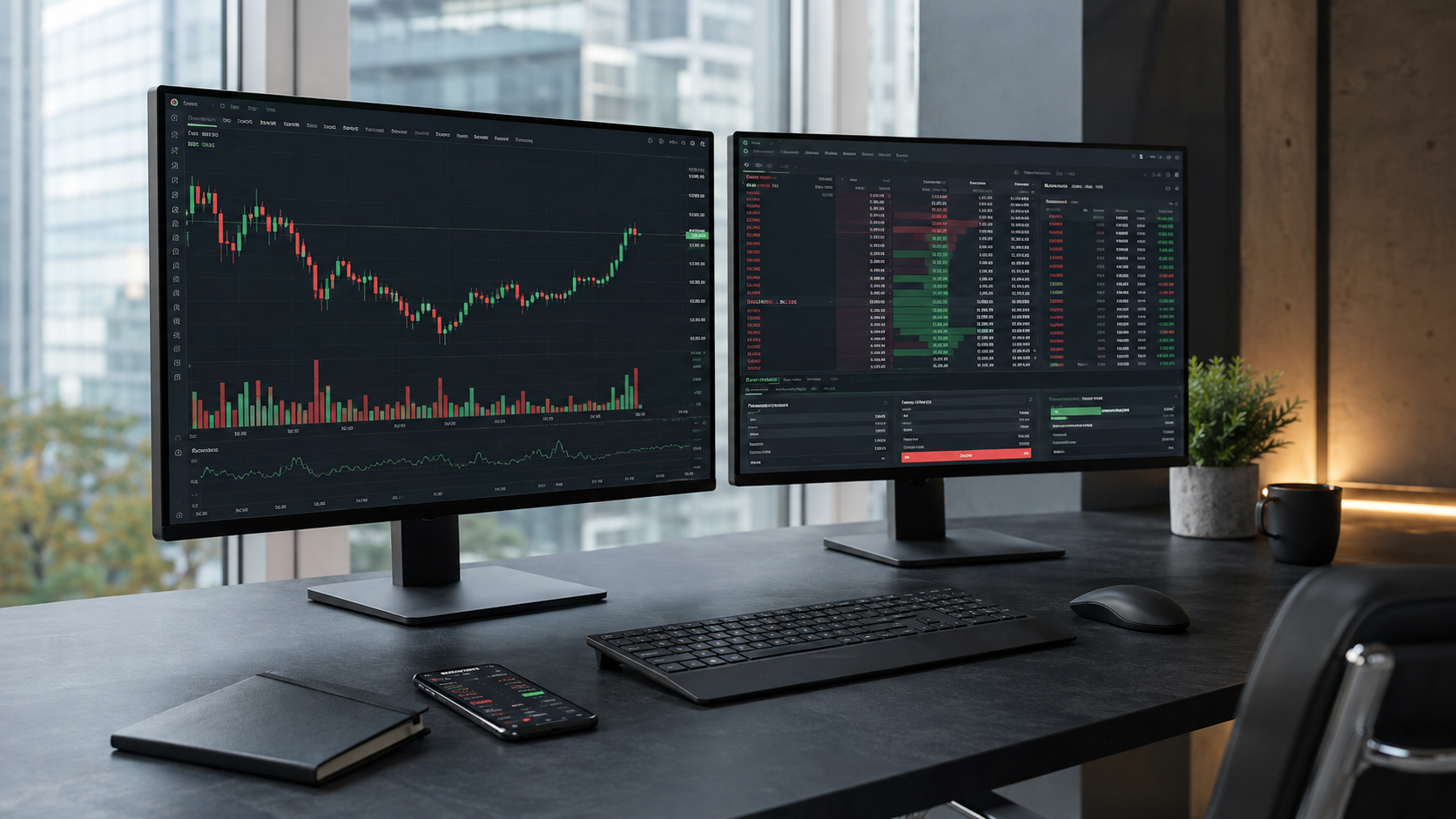
A cryptocurrency exchange is a platform where users buy, sell, and swap cryptocurrency. An exchange may match buy and sell orders, perform a quick swap at the current price, custody assets, or provide access to trades through smart contracts.
Through crypto exchanges, users buy Bitcoin, Ethereum, USDT, and other assets, convert hryvnia or another fiat currency into cryptocurrency, and withdraw funds to their own wallets. Exact features depend on the platform type and the jurisdiction in which it operates.
How a cryptocurrency exchange works
On a classic exchange, a user creates a buy or sell order. The system matches it against other orders in the order book. When price and quantity align, the trade executes and the parties’ internal balances update.
Not every operation inside a centralised exchange is written to the blockchain immediately. The platform may keep an internal ledger between user accounts. A blockchain transaction typically appears when an asset is deposited to a deposit address or withdrawn to an external wallet.
Centralised and decentralised exchanges
1 Centralised exchange — CEX. A company runs the platform. It creates accounts, holds assets in wallets it controls, executes trades, and may run KYC identity checks and financial monitoring.
CEX advantages usually include a clear interface, high liquidity, fiat payment support, and customer support. The main risk is that the user hands control of assets to the platform. The exchange may restrict withdrawals, request documents, or suffer a technical or security incident.
2 Decentralised exchange — DEX. Swaps run through smart contracts, and the user connects a non-custodial wallet. A DEX does not receive the seed phrase or private key, but the user confirms transactions personally and bears the risk of interacting with malicious tokens and contracts.
When swapping on a DEX, you need to consider the network fee, slippage, price impact, minimum amount received, and the swap route.
How to buy cryptocurrency on a centralised exchange
1 Registration. The user creates an account and sets a strong password.
2 KYC verification. The exchange may request an ID document, a photo, proof of address, and additional information about the user’s activity.
3 Funding. The account is funded by bank card, transfer, P2P, or cryptocurrency from another wallet — depending on available methods.
4 Choosing a trading pair. For example, BTC/USDT means trading Bitcoin against USDT.
5 Placing an order. A market order executes at the available market price; a limit order executes only at the user’s specified price or better.
6 Storage or withdrawal. After purchase, the asset can stay on the exchange or be withdrawn to your own wallet after carefully checking the address and network.
Trading pairs, orders, and liquidity
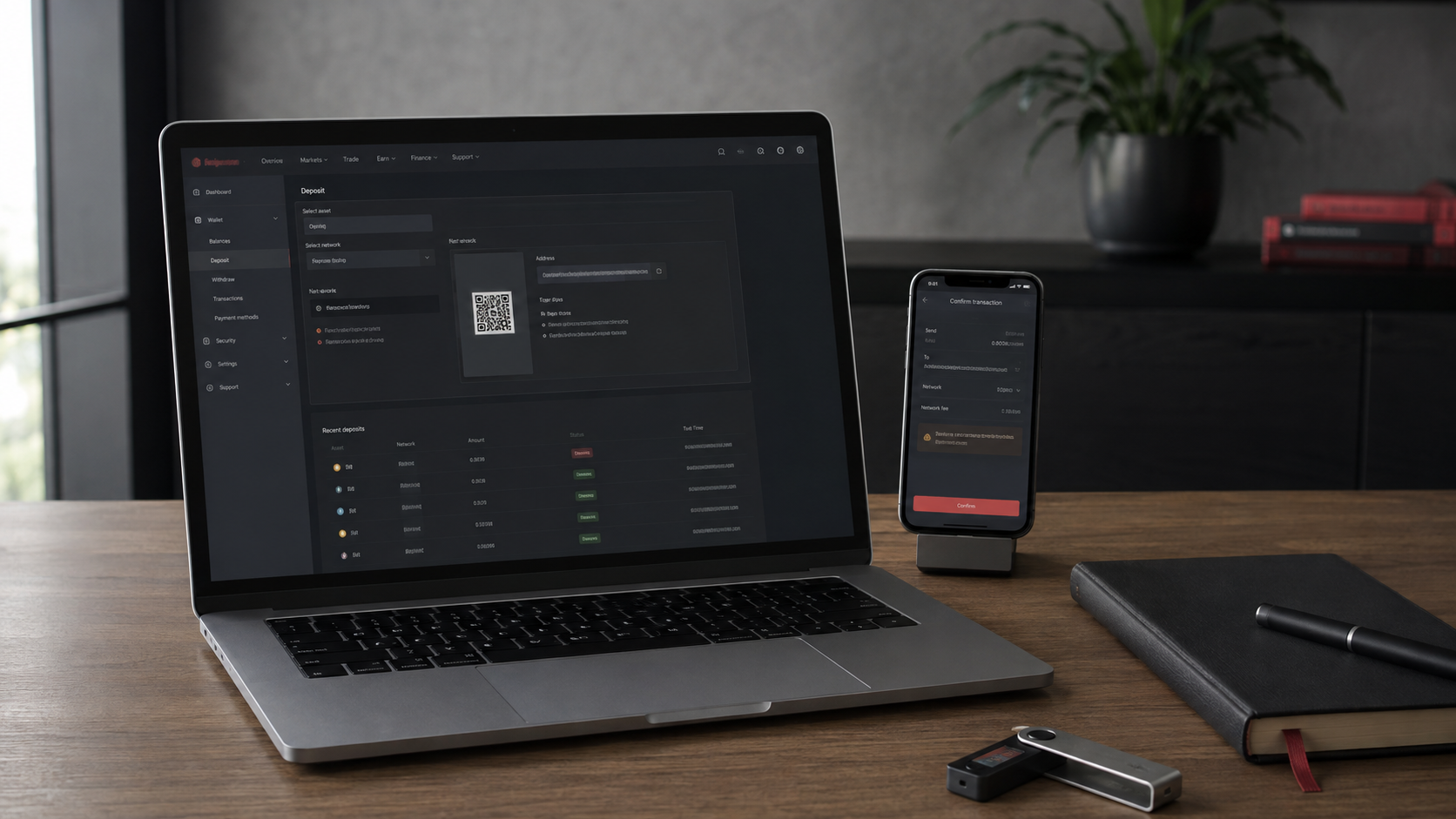
A trading pair shows which asset is bought and which asset is used for settlement. In ETH/USDT, the price shows how much USDT is needed to buy one ETH.
A market order aims for fast execution, but the actual price may differ from expectations during high volatility or low liquidity.
A limit order lets you set a desired price, but does not guarantee that the trade will fill.
Liquidity describes how easily an asset can be bought or sold without a large impact on its price. Low liquidity increases slippage risk and makes exiting a position harder.
Get a consultation
A quick case assessment — no obligation
Which fees a crypto exchange charges
- trading fee — for executing a trade;
- deposit fee — may apply depending on the payment method;
- withdrawal fee — set by the exchange for a specific asset and network;
- network fee — paid for processing a blockchain transaction;
- spread — the difference between buy and sell price in a quick swap.
Before confirming an operation, check not only the trading-fee percentage, but also the final amount received, the rate, the network, and the withdrawal cost.
How to choose a cryptocurrency exchange
- check the legal entity, jurisdiction, and whether the service is available in your country;
- find out whether KYC and proof of funds origin are required;
- review the history of security incidents and compensation policy;
- verify the real website and mobile-app addresses;
- compare trading fees, spread, and withdrawal cost;
- check which networks are available for depositing and withdrawing the asset you need;
- enable two-factor authentication and an anti-phishing code;
- do not keep the full amount of long-term holdings on a single platform.
Why an exchange may freeze an account or a withdrawal
Exchanges apply KYC, AML, and internal risk controls. A review may start because of unusual transaction volume, a login from a new device, a change in personal data, incoming assets from high-risk addresses, another user’s complaint, or a request from a competent authority.
The platform may request Source of Funds or Source of Wealth: statements, trade history, TxIDs, contracts, tax documents, and an explanation of the economic purpose of the operations. Sending random or contradictory materials is a bad idea — they can make the review harder.
How an exchange differs from a crypto wallet
An exchange is primarily for trading and swapping. A crypto wallet provides access to addresses on the blockchain. If the user controls the private key, the wallet is non-custodial. If a service controls the keys, the user effectively has a claim against that service under its rules.
Basic concepts of blockchain, addresses, and keys are explained in “What is cryptocurrency in simple terms”, and the difference between coins and tokens in “What is a token in cryptocurrency”.
Frequently asked questions
Can you use an exchange without verification?
It depends on the specific platform, jurisdiction, and available features. Even if some operations work without full verification, the exchange may request KYC before a withdrawal or during a risk review.
Is it safe to keep cryptocurrency on an exchange?
An exchange makes trading easier, but control of private keys usually stays with the platform. For long-term storage, users often use separate wallets, taking into account their own ability to store a seed phrase safely.
Can funds stolen from an exchange be recovered?
It depends on how the compromise happened, where the funds were sent, how quickly you respond, and whether the services along the route cooperate. You should immediately capture the TxID, contact the exchange, and start tracing the movement of funds.
Account frozen or funds stolen from an exchange?
ProDefence helps prepare a structured explanation for compliance, confirm the origin of crypto assets, analyse transaction history, and assemble a document package for the exchange. In theft cases, we trace funds on-chain, identify related services, and support outreach to platforms and law-enforcement authorities.
Do not hand documents to random “intermediaries” and do not pay dubious unlock fees. Contact ProDefence for a professional assessment and a plan for next steps.
Exchange / compliance
Withdrawal frozen or funds stolen from an exchange?
Send the UID, network, and TxID. ProDefence will help assemble compliance materials and trace asset movement.
Confidential. No promises of “instant recovery”.


