



A token is a digital asset created on an existing blockchain. It can act as a means of payment, confirm voting rights, grant access to a service, represent a share in a digital project, or be a unique object such as an NFT.
In everyday language, “token”, “coin”, and “cryptocurrency” are often used as synonyms. Technically there is a difference: a coin is the native asset of its own network, while a token exists because of a smart contract deployed on another blockchain.
A token in simple terms
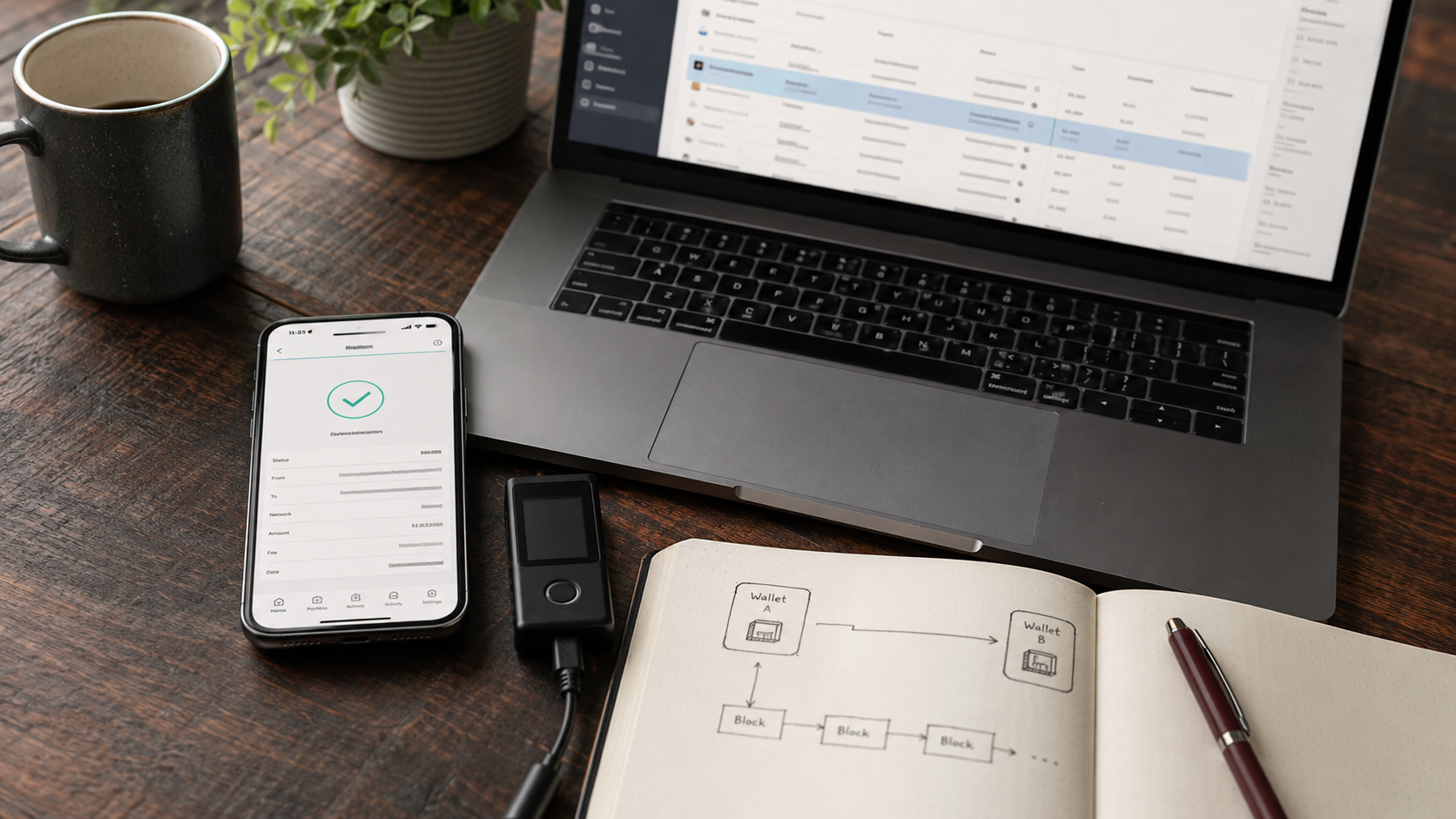
A token can be compared to a digital certificate whose record is stored on the blockchain. The smart contract defines its name, symbol, total supply, transfer rules, and other functions. When a user sends a token, the blockchain does not move a physical file. The smart contract updates records of how many units belong to each address.
For example, many tokens on Ethereum use the ERC-20 standard. It defines a shared set of functions so wallets, exchanges, and other applications can support those tokens.
How a token differs from cryptocurrency
1 Own blockchain. Bitcoin has its own network and native coin BTC. Ethereum has its own network and native coin ETH. A token uses another network’s infrastructure.
2 Paying fees. Transferring a token usually requires the native asset of that blockchain. For example, an ERC-20 transfer on Ethereum is paid for in ETH.
3 How it is created. Launching a new coin requires creating or modifying a blockchain. A token can be issued through a smart contract on an existing network.
4 Functionality. A token can be programmed for voting, rewards, product access, representing a unique object, or other functions.
A broader explanation of how digital assets work is available in “What is cryptocurrency in simple terms”.
Types of tokens
Payment tokens. Used for transfers or settlements within a given ecosystem.
Utility tokens. Provide access to product features, discounts, services, platform capabilities, or other useful options.
Governance tokens. Let holders take part in votes on the development of a decentralised protocol. Holding a token does not always mean ownership of a company or guaranteed influence over every decision.
Stablecoins. Their value is designed to track the dollar, euro, gold, or another asset. USDT and USDC are examples of fungible tokens that exist on several blockchains.
NFTs. A non-fungible token has a unique identifier. It may represent a digital item, ticket, collectible, or another unique right.
Tokenised assets. Such tokens may be linked to rights in real-world property, financial instruments, or other assets. The holder’s actual rights depend not only on the on-chain record, but also on contracts, the issuer’s structure, and applicable law.
How a token is created
A developer chooses a blockchain and a matching standard, then creates a smart contract. Key parameters are set there: name, symbol, supply, balance display precision, and rules for minting, burning, locking, or governance.
After deployment, the smart contract receives a unique address. It is the contract address — not only the name or symbol — that distinguishes a genuine token from another asset with the same label. Tokens with identical tickers can exist at the same time on different networks.
Get a consultation
A quick case assessment — no obligation
How to check a token before buying or receiving it
1 Verify the contract address. Cross-check it against the project’s official website, documentation, and trusted block explorers. A name and logo in a wallet are not proof that the asset is genuine.
2 Check the network. The same asset may exist on Ethereum, Tron, BNB Smart Chain, and other networks. Choosing the wrong network affects whether funds can be credited or moved later.
3 Analyse the smart contract. It matters whether the contract owner can mint new tokens, freeze addresses, change fees, or restrict sales.
4 Review liquidity and distribution. Concentration of a large share of tokens on a few addresses, controlled liquidity, and unusual transfers can be risk signals.
5 Assess the source of the assets. Even a genuine token may arrive from addresses linked to hacks, fraud, sanctions activity, or money laundering.
How scammers use fake tokens
Anyone can create a token with a name and symbol similar to a well-known asset. The scammer then sends it to a victim’s wallet, shows a fake balance, or invites them to a third-party site to “activate”, “sell”, or “unlock” funds.
Another scenario is selling a token that can be bought but cannot be sold because of restrictions in the smart contract. Contracts with a hidden ability for unlimited minting, liquidity removal, or blocking selected users are also a risk.
Where tokens are bought and stored
Tokens trade on centralised and decentralised exchanges. A centralised service holds user assets on its own addresses and keeps an internal ledger. On a DEX, the trade runs through smart contracts without giving the exchange the private key.
For more on how these platforms differ, see “What is a cryptocurrency exchange”.
Frequently asked questions
Is USDT a coin or a token?
USDT is issued as a token on several blockchains. USDT versions on different networks have different contract addresses and are not technically interchangeable without an exchange or bridge.
Can a token have the same name as a well-known asset?
Yes. Names and symbols are not unique and can be copied. The main technical identifier is the smart-contract address on a specific network.
Can you receive a fake token by accident?
Yes. Scammers mass-send tokens to public addresses. The mere appearance of an asset in a wallet does not mean you should interact with it.
Need a token or crypto project checked?
ProDefence performs technical and transactional analysis of tokens: contract address, owner permissions, asset distribution, liquidity, related addresses, and fund origin. That review helps spot a fake token, a scam scheme, or critical risks before a large transfer.
If you already bought a suspicious token or lost funds, contact ProDefence for an initial transaction analysis and next-step plan.
Token check
Suspect a fake token or risky contract?
Send the contract address, network, and TxID. ProDefence will review the asset without asking for your seed phrase.
Confidential. No promises of “instant recovery”.


