


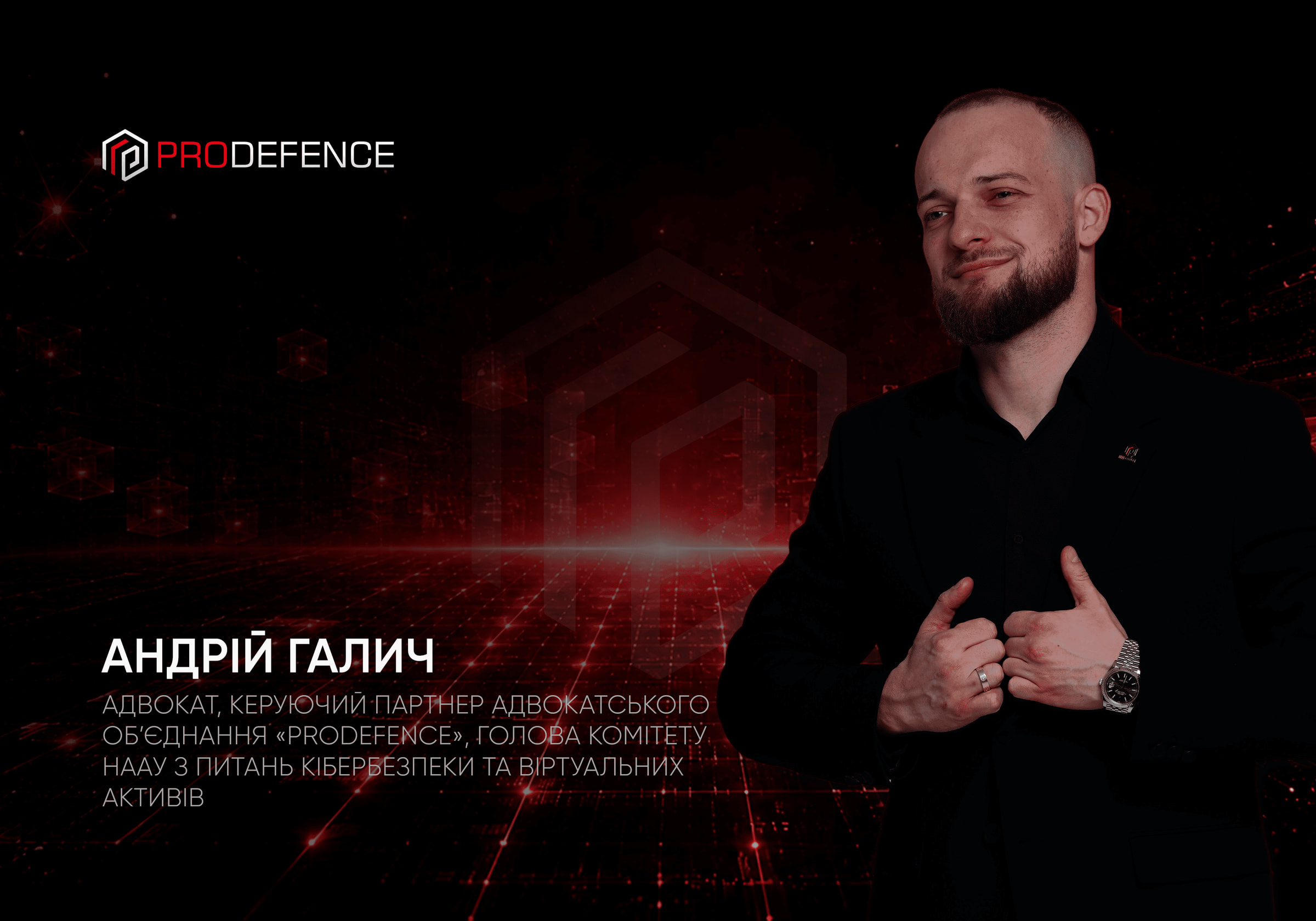
Attorney–client privilege needs not only legal, but also practical technical and cyber protection. Today confidential information can be obtained with hidden microphones, voice recorders, cameras, remote data-transmission devices, and malware. A lawyer therefore needs to understand the main methods of covert information acquisition and organise work so as to reduce the risk of leaks about themselves and their client.
Covert information acquisition: official and unofficial
It is useful to distinguish covert information acquisition by its nature. Separately there are measures carried out by authorised bodies within covert investigative (search) actions or operational–search activity. Another plane is unauthorised acquisition of information by private individuals.
It is the second direction that presents a distinct practical risk for lawyers and their clients. This includes commercial espionage, private conflicts, competitive interests, or so-called amateur surveillance. Complex professional equipment is not required. The market offers a significant number of inexpensive devices that can record audio or video, store information, or transmit it at a distance.
Therefore this article focuses on protection against physical means of covert information acquisition that outsiders may use against a lawyer or a client.
How covert information-acquisition devices work
The main task of such devices is to obtain audio or video without the knowledge of the person under observation. Technically they can operate in several main scenarios.
Standalone recording. The device captures sound or video and stores it in memory. In that case the person who installed it may need physical access again to retrieve the recording.
Real-time transmission. The device captures an audio or video signal and immediately transmits it over an available communications channel. In that model the attacker does not need to return regularly to collect recordings.
Combined mode. The device may store information in internal memory and also transmit it at intervals — for example accumulating data during the day and then sending it to a remote resource.
For a lawyer it is important to understand that the absence of an obvious signal transmission does not mean there is no recording device. A device may work autonomously and store information inside itself. See also finding bugs and hidden cameras.
Physical access as one of the main risks
To install a covert device in a premises or a vehicle, an outsider often needs at least brief physical access. Protection of attorney–client privilege should therefore start with controlling access to places where confidential conversations take place.
A device may be planted in a car while the owner is away. It may also be left in an office, meeting room, or other space. In some cases a visitor may bring a technical device, leave it in the room, or connect it to a power source.
That is why a vehicle in which a lawyer holds negotiations or discusses confidential matters also needs protection against uncontrolled access.
It is advisable to use modern security systems and solutions that make unauthorised access to the vehicle more difficult. Control keys carefully and understand who, and under what conditions, can enter the cabin in the owner’s absence.
The point of such protection is not only to prevent vehicle theft. It is equally important to avoid a situation where an outsider has enough time to enter unnoticed and leave a technical information-acquisition device inside. Practical vehicle review: how to find a GPS tracker or bug in a car.

Protecting premises and controlling repeated access
Office and meeting room
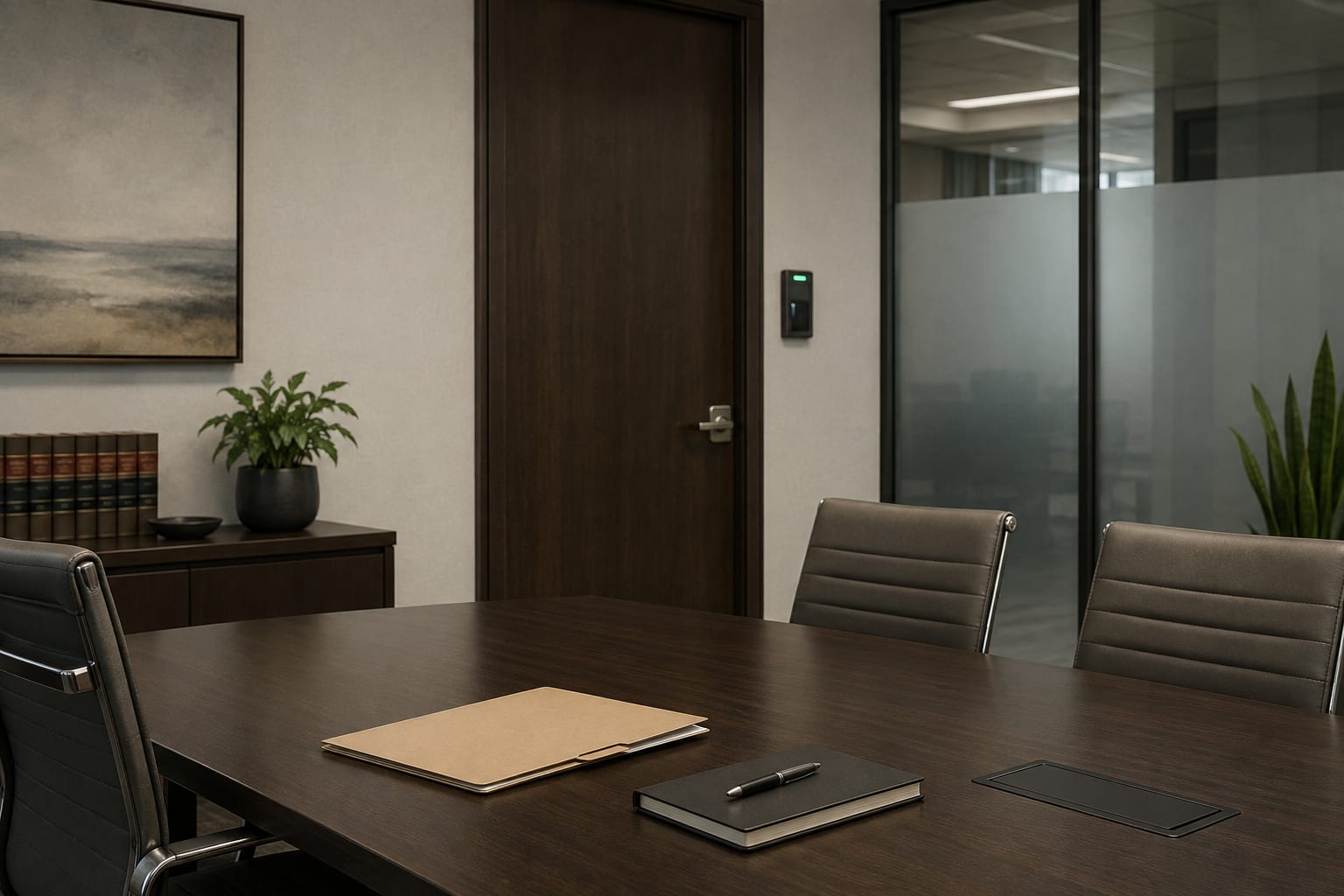
The same principle applies to an office or other premises where a lawyer works with clients. Such a space is best protected with access control, an alarm system, and CCTV. The main goal is to prevent uncontrolled entry by outsiders while the lawyer is away.
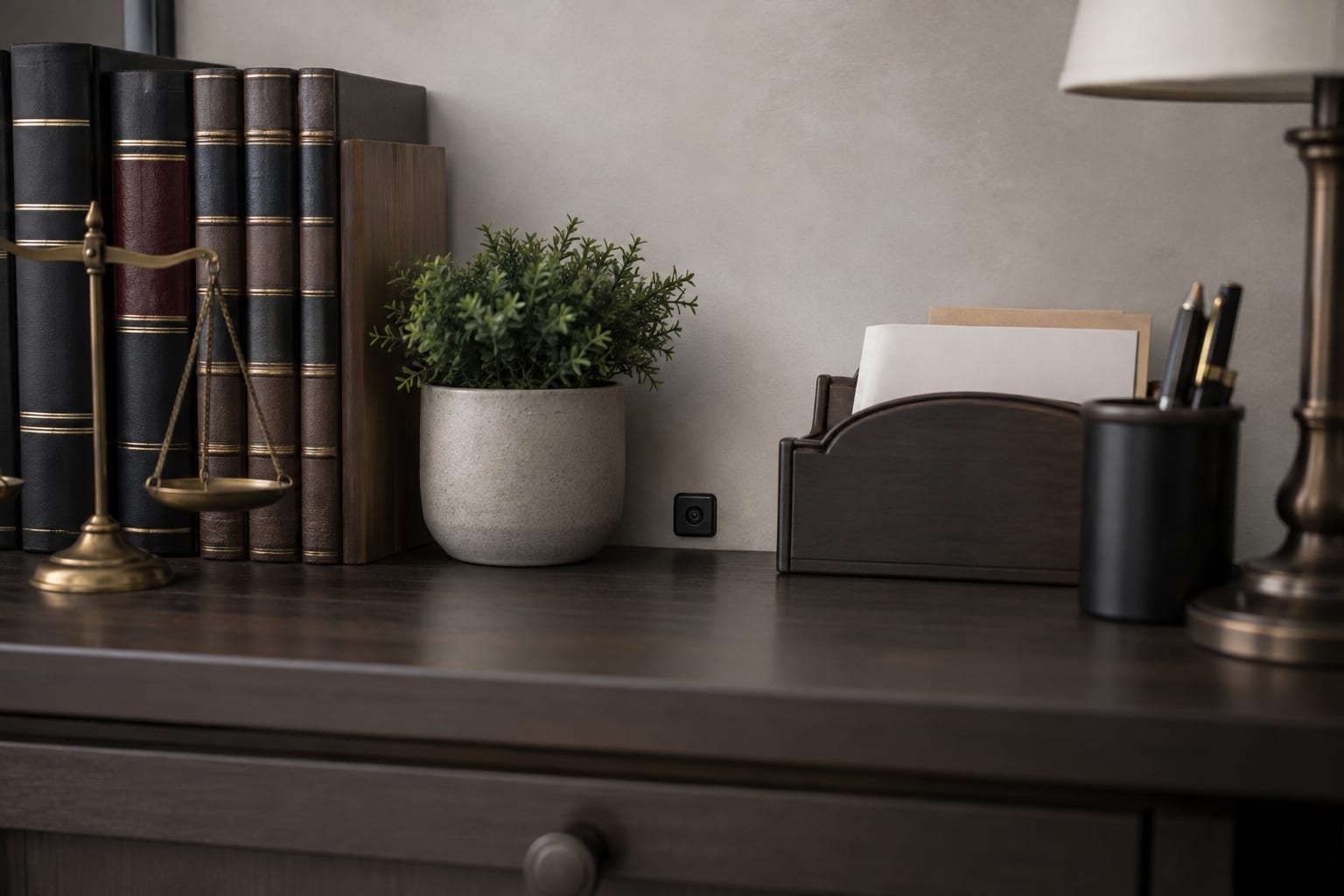
If access is not controlled, an outsider can enter the office, leave a recording device, connect it to power, and hide it among interior items.
A lawyer therefore needs to know who has access to the workspace, who can enter in the owner’s absence, and whether such a visit can be established. Access control is one of the basic layers of technical protection of attorney–client privilege. See also a checklist for protecting a meeting room.
Repeated access by outsiders
Pay separate attention to people who, without a clear reason, frequently enter the premises or try to regain access. That matters because of how standalone recording devices work.
If a portable device runs on a battery, it may need charging, replacement, or retrieval. If information is stored only in internal memory, the device may also need to be physically removed later to obtain the recordings. The person who installed such a device may therefore, in some cases, have to return to its location.
A return visit alone does not, of course, prove an attempt at covert information acquisition. But when working with attorney–client privilege it is important to understand who, when, and for what purpose obtains access to the premises.
Acoustic protection and a controlled environment
Vibroacoustic protection of negotiations
Another protection direction is the use of vibroacoustic and acoustic methods — specialised devices that use acoustic noise or vibration to create additional interference against acquisition of speech information.
Their main task is to make it harder for an outsider’s technical device to obtain a clean, intelligible signal from the premises. Such equipment can be used where confidential negotiations are held regularly, including law offices and meeting rooms.
At the same time, vibroacoustic protection should be treated as one element of a security system. Its effectiveness depends on the specific room, the method of information acquisition, equipment placement, and the characteristics of the technical means one needs to counter. Creating acoustic noise alone is therefore not enough to treat negotiations as fully protected. See also acoustic leakage channels through a wall, window, or ventilation.
Controlled environment
When choosing or leasing premises for confidential work, look not only at the office itself but also at its surroundings. That approach can be described as a controlled environment.
A lawyer should preferably understand which spaces are above, below, and beside the office or meeting room; who uses them; and how close outsiders can get to the place where confidential negotiations are held.
The essence of a controlled environment is maximum awareness of the space around the room. Potential technical risk can arise not only inside the office itself. Adjacent rooms, shared walls, or other structural elements can create an opportunity to bring technical equipment close to the negotiation space.
When choosing an office, therefore, evaluate not only convenience or location, but also how well the surrounding space is controlled.
Specialised tools and negotiations outside the office
For more sensitive negotiations, specialised personal acoustic-protection tools may be used — equipment used during the conversation itself and working with the user’s voice signal. Such devices can create additional acoustic background or change the conditions in which an outsider’s device tries to record speech.
The main task of such equipment is to make it harder to obtain a high-quality recording suitable for further analysis. This approach can be especially relevant when negotiation content is highly confidential and the risk of outsider recording is assessed as elevated.
At the same time, no such device should be treated as an absolute guarantee that recording or later voice analysis is impossible. The result depends on the specific equipment, how it is used, and the method of recording.
Another recommendation for especially confidential conversations is, in some cases, to leave the usual premises. If the most sensitive issues are always discussed in the same office or car, that creates a predictable place where a recording device may be planted in advance.
Holding certain negotiations outdoors reduces the risk of using a device previously hidden in a specific room. Even then one cannot speak of absolute safety: remote means of acquiring acoustic information exist. The main principle is that the lawyer should understand how information could be obtained in a given place and assess the risk accordingly.
Client protection, cyber risks, and a comprehensive approach
Protecting the client as part of attorney–client privilege
All of these measures concern not only the lawyer. Confidential information arises in communication between lawyer and client, so technical security must cover both participants in the conversation.
If negotiations take place in a controlled room, but a device that can record or transmit information is next to the client, the confidentiality threat remains. A lawyer should therefore not only care about their own technical security, but also explain to clients why, during especially important negotiations, electronic devices nearby must be treated carefully.
Physical devices are only part of the modern problem
This article focuses on technical information protection against physical devices that acquire audio and video. It is important to understand, however, that modern threats are not limited to that.
An equally relevant risk is malware on a smartphone, computer, television, or other electronic device. If such software gains access to the device microphone, it can use it to obtain audio without installing a separate physical microphone in the room.
The information obtained can then be sent to a remote server or other infrastructure controlled by a third party. In that situation the role of a covert information-acquisition tool is effectively performed by an ordinary device that the lawyer or client uses every day.
Technical information protection and cybersecurity
Today technical information protection and cybersecurity are hard to treat separately. Physical security of premises may be organised properly, but that is not enough if one of the devices inside is compromised by software.
Conversely, a protected smartphone or computer does not remove the risk that a physical information-acquisition device may be present in the room. These directions therefore sit in the same plane and should be addressed comprehensively.
A lawyer needs to understand the development of modern technologies, know the basic principles of technical threats, and account for the fact that methods of covert information acquisition constantly change — for their own security and for that of their clients.
Conclusion
Protecting attorney–client privilege today requires understanding the technical methods by which confidential information can be obtained. Physical devices can record audio or video, store information in internal memory, transmit it in real time, or do so periodically.
A lawyer therefore needs to control physical access to vehicles and premises, use security systems, pay attention to repeated access by outsiders, assess the surrounding environment, apply acoustic and vibroacoustic protection where necessary, and choose carefully where especially confidential negotiations take place.
At the same time, technical security concerns not only the lawyer but also the client. Any uncontrolled device nearby during negotiations can create additional risk to confidentiality.
It is also necessary to remember that a modern threat may lie not only in a hidden microphone or camera. A phone, computer, television, or other electronic device can also be used to obtain information.
Technical information protection and cybersecurity are therefore effectively parts of one system. A lawyer should understand how modern threats work, follow technology developments, and care for the security of themselves, their clients, and attorney–client privilege.
Attorney–client privilege
Need to check an office, meeting room, or vehicle?
The ProDefence team will help assess information-leakage risks, carry out a TSCM survey, and propose practical protection measures — without unfounded guarantees.
Confidential. No request for a seed phrase or private keys.


