


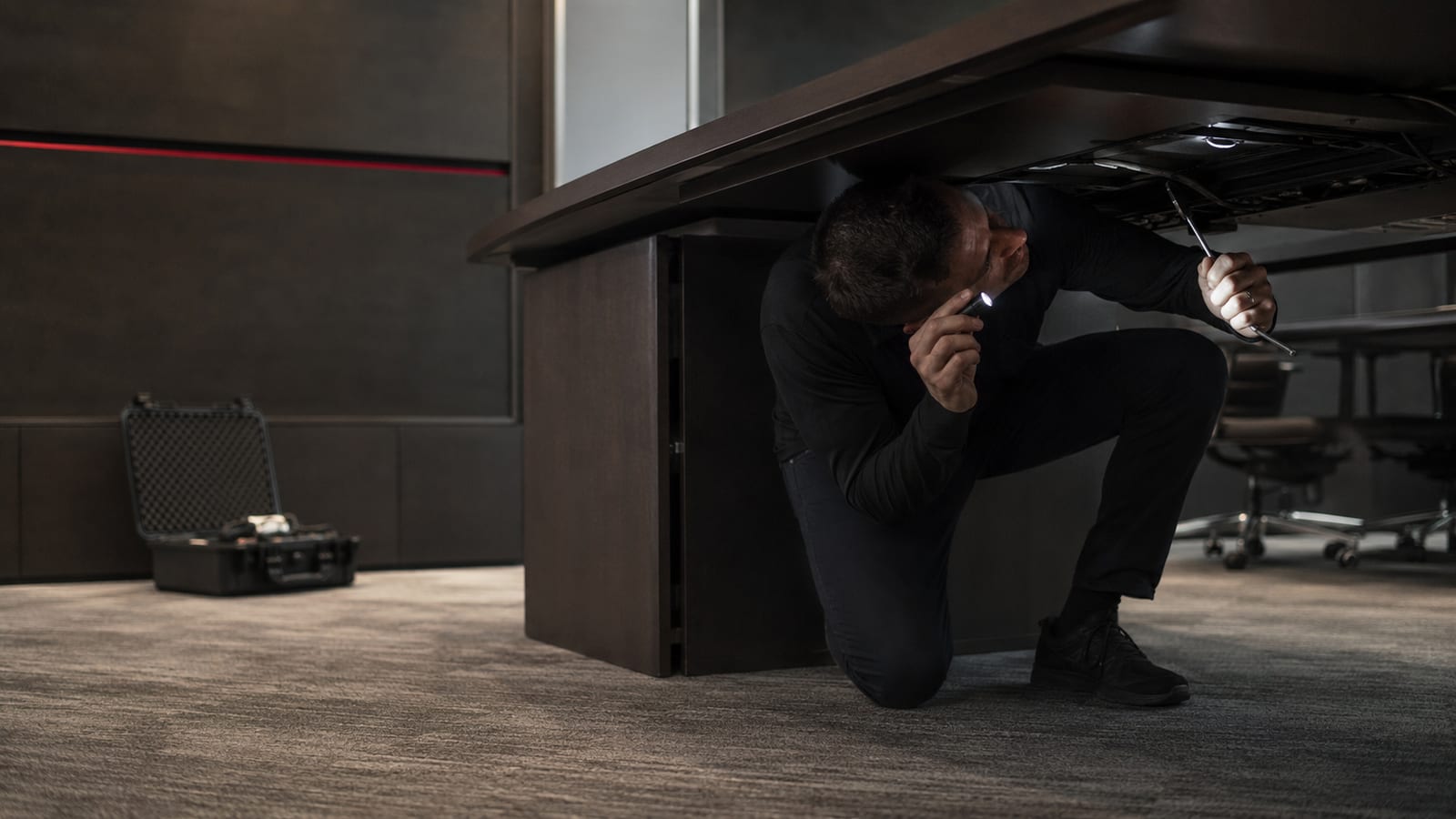
Confidential information does not always leak through a compromised email account or a stolen password. Sometimes the source is a miniature microphone, a hidden camera, a standalone voice recorder, a GPS tracker, or another covert device installed in a premises or vehicle.
Modern covert surveillance tools may transmit over radio, a mobile network, Wi-Fi, or Bluetooth. Some devices transmit nothing at all: they store recordings locally or activate only on a schedule, by voice trigger, or by remote command. That is why the absence of noise, interference, or suspicious signals does not mean a space is safe.
Below we look at where covert devices are most often found, whether you can check a premises yourself, and how a professional TSCM sweep differs from scanning with a cheap detector.
Where bugs and hidden cameras may be installed
Placement depends on the surveillance objective, device type, and an outsider’s access to the site. During a sweep, the goal is not to hunt for a movie-style “bug”, but to examine all potential information-leak channels systematically.
1 Power fittings and building infrastructure. Sockets, extension cords, chargers, power strips, light fixtures, ventilation grilles, and similar equipment have power access and are often overlooked. A foreign electronic component may look almost identical to a genuine part.
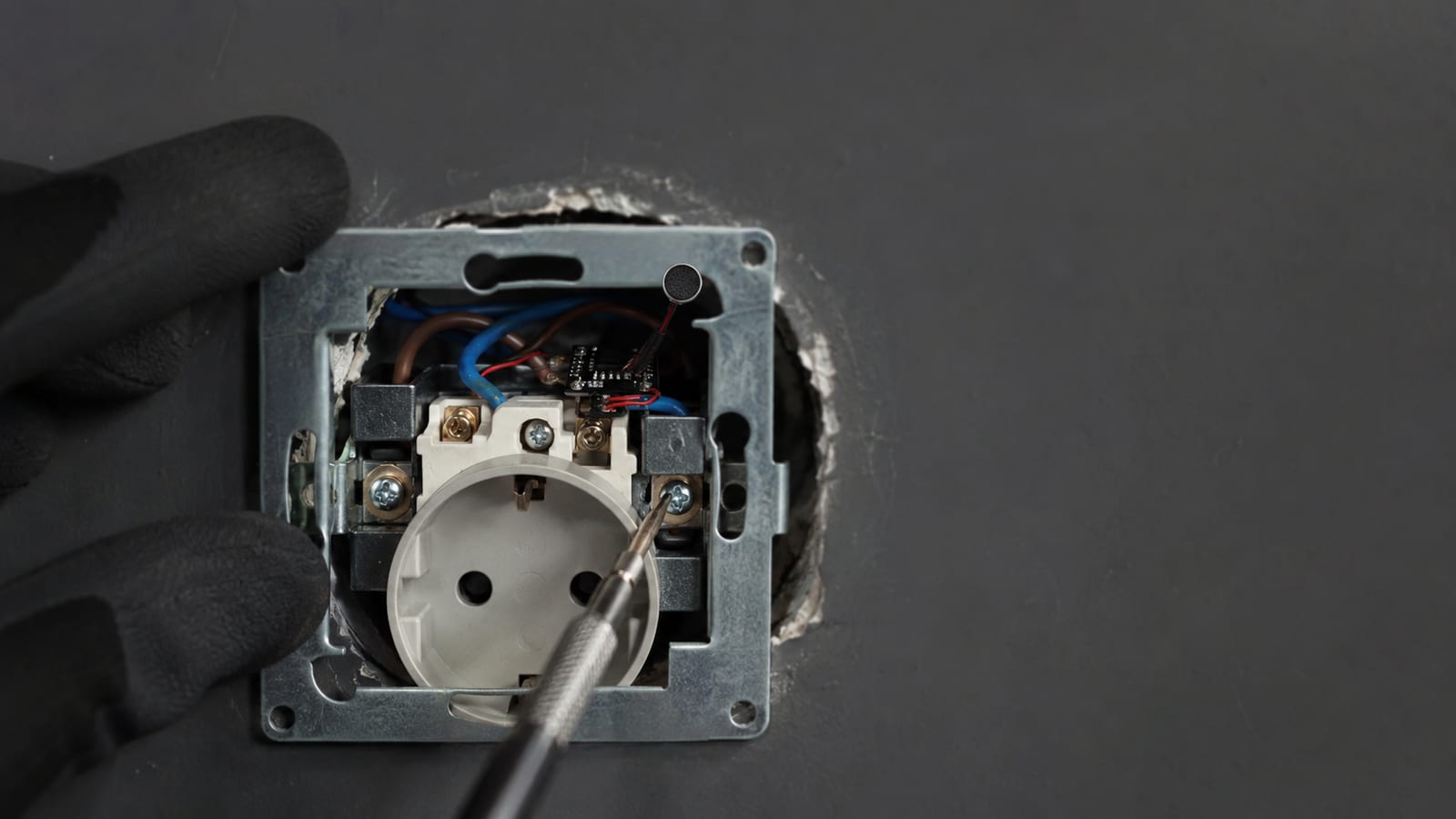
2 Office equipment and interior items. Phones, routers, TVs, video-conferencing systems, clocks, sensors, speakers, souvenirs, and equipment that recently appeared in the room deserve inspection. Pay particular attention to items that were gifted, repaired, or temporarily removed.
3 Furniture and meeting areas. If an adversary cares about conversation content, meeting rooms, executive offices, and places used for regular confidential talks have the highest value. Tables, chairs, decorative panels, suspended ceilings, and other structures near interlocutors are checked.
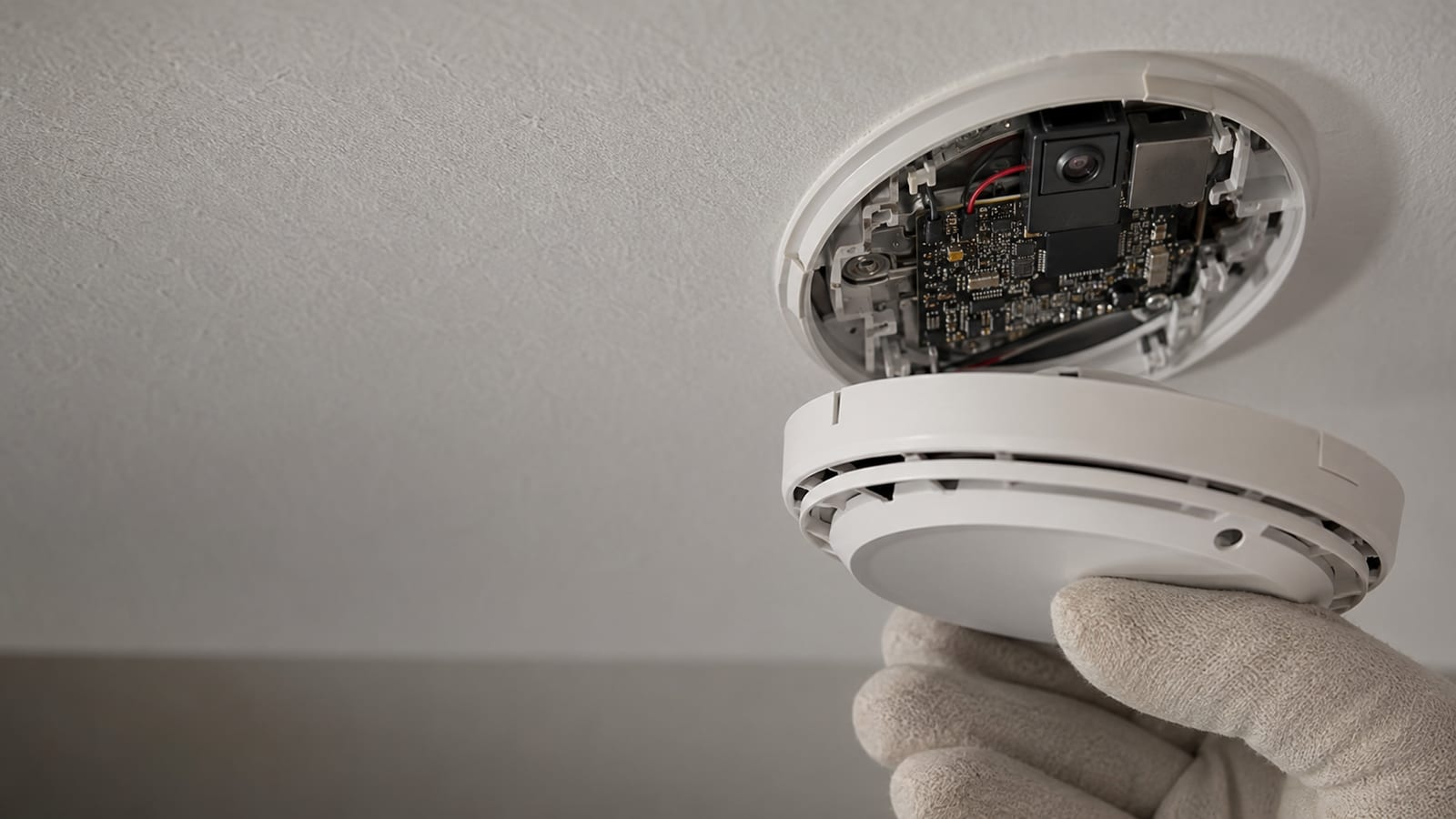
4 Objects with a good view of the room. A hidden camera may be disguised as a smoke detector, clock, charger block, lighting element, or household item. To capture faces, documents, or screens, the camera needs an appropriate line of sight — so specialists analyse not only the object, but also what falls within its field of view.
5 Vehicles and company transport. Vehicles may contain GPS trackers, standalone beacons, microphones, or modules that transmit over a mobile network. A vehicle sweep covers the cabin, boot, electronic systems, and accessible exterior structural elements.

Important: crackling during a phone call, rapid smartphone battery drain, or speaker interference do not prove eavesdropping. Most such “signs” have ordinary technical explanations, and professional covert devices may show no noticeable symptoms.
Can you find eavesdropping on your own
A DIY inspection can help spot obvious changes, but it does not replace a professional sweep. Start with an equipment inventory: what devices should be in the room, who owns them, who had access, and whether any recent repair or installation work took place.
1 Inspect unfamiliar and recently moved items. Watch for foreign chargers, adapters, cables, sensors, and objects nobody can explain. Fresh signs of disassembly, new holes, or parts that do not match the rest of the equipment can also raise concern.
2 Check devices connected to the network. A router admin panel can show active clients, but an unknown entry is not necessarily a bug — it may be a TV, printer, guest phone, or smart-home device. Meanwhile, a standalone camera or recorder may never join your network at all.
3 Do not rely on mobile apps alone. A smartphone lacks the full sensor and antenna set needed for a comprehensive sweep. An app may list available Wi-Fi or Bluetooth devices, but it will not find a standalone recorder, a wired microphone, or a device that is in standby at the moment of search.
4 Treat consumer RF detector results with caution. A modern office constantly runs phones, access points, wireless earbuds, sensors, and other electronics. A simple detector reacts to radio energy but usually cannot reliably identify the source or purpose. Users end up with many false positives — or a false sense of safety.
5 Do not dismantle a suspicious item yourself. Do not open sockets, electrical panels, or equipment connected to the mains. If an item may be evidence of unlawful surveillance, careless removal can destroy data or installation traces. Restrict access to the room, document the discovery, and contact specialists.
A household check can only find obvious anomalies. It does not allow you to conclude with confidence that a premises has no covert devices, hidden cameras, or other leak channels.
Get a consultation
A quick case assessment — no obligation
How a professional TSCM premises sweep works
TSCM is a set of technical and organisational measures to detect covert surveillance and vulnerabilities through which conversations, images, or data may be intercepted. A professional sweep is not one instrument: methods are selected for the site, risk level, and likely leak scenario.
1 Risk assessment and preparation. The specialist clarifies the premises’ purpose, the nature of the information, who has access, recent renovations, suspicious events, and the possible installation window. This shapes the threat model and priority sweep zones.
2 Visual and physical inspection. Rooms, furniture, equipment, cable runs, and accessible infrastructure are examined. Specialists look for foreign components, atypical connections, signs of tampering, and positions from which conversations or video can be captured effectively.
3 Radio-frequency environment analysis. Professional analysers examine signals in the room, their structure, activity, and possible source. The task is not merely to see a radio signal, but to separate legitimate equipment from anomalous or unidentified activity.
4 Specialised search tools. Depending on the case, non-linear junction detectors, optical camera finders, thermal imaging, and tools for analysing cable lines, networks, and phone systems may be used. Combining methods helps find not only active transmitters, but also electronics that are not radiating during the sweep.
5 Documenting results and recommendations. After the sweep, the client receives information on devices found, anomalies, and vulnerabilities. Where needed, recommendations cover access control, safer meeting practices, equipment use, and scheduling of regular checks.
A sweep reflects the state of the site at the time it is performed. If outsiders regain access afterwards, renovations take place, or new equipment is installed, risk can return. For meeting rooms, executive offices, and sites with high-value information, periodic sweeps and checks before important meetings are advisable.
Conclusion
Professional bug hunting is not a few passes with a universal detector. A sound result requires checking the physical environment, the RF spectrum, electronic equipment, network connections, and potential placement points for covert devices.
Specialists at ProDefence conduct comprehensive TSCM sweeps of offices, apartments, meeting rooms, hotel rooms, and vehicles. We design the check around a realistic threat scenario, use professional equipment, document findings, and provide practical recommendations for ongoing information protection.
We do not create a false sense of security or draw conclusions from a single instrument. The client receives a clear explanation of the work performed, risks identified, and technical limits of the sweep.
Professional eavesdropping detection
Suspect an information leak, a hidden camera, or a bug?
Describe the site and the circumstances that raised concern. The ProDefence team will assess the situation confidentially, propose the appropriate scope of work, and help protect your negotiations and private space.
Confidential. Professional. With documented results.


