


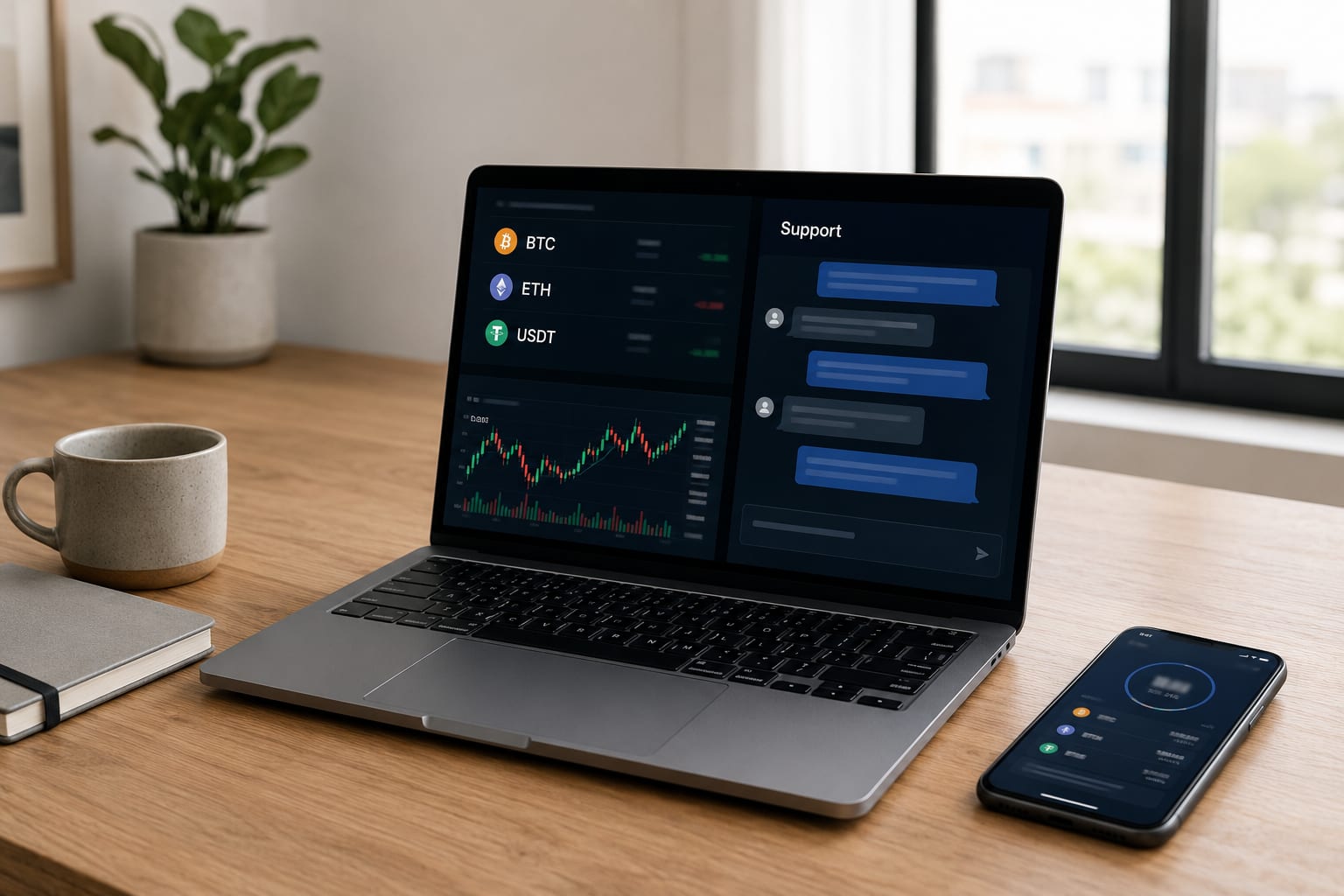
A wallet balance may show a token named USDT, with a familiar green logo and even an impressive dollar amount. That does not mean the user received genuine Tether USD₮. On most public blockchains anyone can create a token, name it USDT, and copy the original symbol and image. Scammers therefore present fake transfers as payment for goods, investment profit, a refund, or an “unlocked” balance.
Core verification principle: a token is defined not by its name or logo, but by the network and smart-contract address. You also need to check the transaction itself in a blockchain explorer. Below is a sequence that helps avoid mistaking a digital copy for real USDT.
Why fake USDT can appear in a wallet
USDT operates on several networks, including Ethereum, Tron and other blockchains officially supported by Tether. On each network the original token has its own contract address. A scammer can deploy another contract with the same name, symbol and decimal places. Visually the two assets look almost identical, but their contracts, liquidity and real value differ.
A counterfeit token often reaches a wallet through one of these scenarios:
- Fake payment. The buyer shows a successful transaction and insists the transfer already arrived, but sent a self-created copy instead of official USDT.
- Fake investment profit. A website or wallet displays a large balance, then demands a fee, tax or insurance deposit to withdraw.
- Unwanted token with a link. An unknown asset is airdropped en masse; its name or description pushes the user to an external site and wallet connection.
- Network substitution. The sender claims they transferred USDT on one network while showing a transaction for another token or blockchain.
- Interface manipulation. A fake site, bot or app displays a drawn balance that does not exist on-chain at all.
Sometimes a wallet auto-recognises a popular token and shows a price. Interfaces can err, and logos and metadata are copied. Even the label USDT in the asset list does not replace checking the contract. A receipt screenshot is also not proof of payment: it can be edited, and a pending or failed status can be hidden.
Official materials on fake stablecoins and counterfeit tokens are available in the Coinbase and MetaMask help centres.
Get a consultation
A quick case assessment — no obligation
How to verify whether USDT is genuine
Start by identifying the network. Ask the sender which blockchain they used, and match that to the recipient address network. TRC-20, ERC-20 and other formats are not interchangeable labels for one entry: they are different networks, explorers and contract addresses.
- Open the transaction in the correct blockchain explorer. Use the transaction hash, not a screenshot. Confirm the status is successful, the recipient address matches yours, and confirmations are sufficient for your scenario.
- Find the token contract address. In the transfer details the explorer shows which asset contract was called. Do not confuse the contract address with the sender or recipient address.
- Match the contract to Tether’s official list. Go to the Supported Protocols page yourself, not via a stranger’s link. Select the network and compare character by character.
- Review asset information. In an official explorer assess the contract name, trade history, holder count and token labelling. These are supporting signals; the decisive check remains a match with the address published by the issuer.
- Reconcile all payment details. Network, recipient address, amount, token, time and status must match the agreement. If even one parameter differs, do not release goods or treat payment as complete until verification finishes.
Example: two tokens can both be named USDT and share the same logo, but one is called by the official Tether contract and the other by a random contract created a few days ago. On the blockchain these are entirely different assets.
Do not connect a wallet to an unknown “USDT verification service” merely to check authenticity. Basic verification needs only a public transaction hash, the contract address and an official blockchain explorer. No seed phrase, private key or transaction signature is required.
Separately from token authenticity, assess transactional history and AML risk. Genuine USDT can still originate from addresses linked to fraud, hacks or sanctions. For significant deals it is wise to run two different checks: first confirm the contract is original, then examine asset origin. See how to check USDT “cleanliness”: AML screening.
What to do after receiving a fake token
If the contract does not match the official one, do not try to swap the token and do not follow links in its name or description. Do not grant Approve and do not interact with a suspicious smart contract. In most cases an unwanted asset can be hidden in the wallet interface without any on-chain operation.
If fake USDT was used as part of a scam or false payment, preserve evidence for account blocks and correspondence retention:
- transaction hash, network and token contract address;
- sender and recipient addresses, amount and exact operation time;
- full correspondence, nicknames, phone numbers, emails and profile links;
- screenshots of the site or app showing the balance;
- details of any fee, deposit or prior genuine transfers paid;
- deal terms, invoices, receipts and messages claiming successful payment.
A counterfeit token itself usually cannot be turned into real USDT, because it is a different smart contract without matching reserves. Analysis of addresses, prior payments, exchange interactions and linked wallets can still help reconstruct events and define next steps. If real funds were already handed to scammers, see how to recover stolen cryptocurrency.
Need to verify USDT or document a crypto scam?
ProDefence specialists professionally verify the token and its contract, analyse transactions on the relevant network, trace asset movement and prepare a report with preserved digital evidence. That matters especially before a large agreement, or when fake USDT has already been used as proof of payment.
Contact ProDefence: on an initial consultation we assess the available data, explain realistic options and identify what information to preserve. For analysis we do not ask for a seed phrase or private key, and we do not promise an outcome that cannot be guaranteed.
USDT verification
Suspect fake USDT or a false payment?
Send the transaction hash, network and contract address. ProDefence will verify the token and preserve evidence without requesting a seed phrase.
Confidential. No “instant recovery” guarantees.


