



This material is informational and does not replace advice on a specific case. Information is current as of August 2026.
Today, owners of digital assets increasingly store them not on exchanges or in software wallets, but on physical devices. A hardware (cold) crypto wallet is a compact device such as a Ledger or Trezor that stores private keys offline. In a pocket or briefcase it can hold assets worth hundreds of thousands of dollars. The same amount in cash would take up far more space and immediately attract attention. That is why law enforcement officers increasingly seize these small devices during searches.
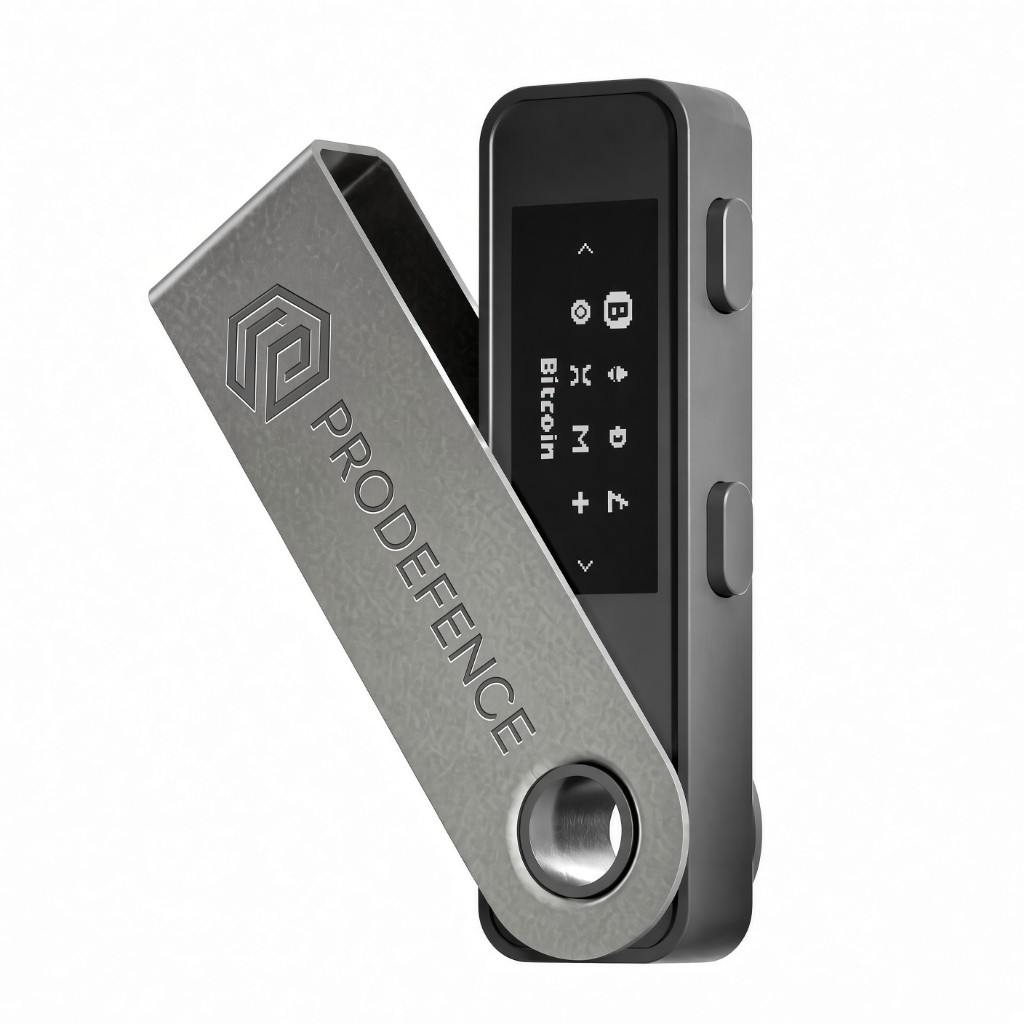
Procedural status of a hardware crypto wallet
A physical crypto wallet is an electronic information system within the meaning of procedural law. The Criminal Procedure Code of Ukraine expressly prohibits temporary seizure of electronic information systems, computers or their parts, and mobile phones except in four cases:
- providing the device together with the information on it is a necessary condition for an expert examination;
- the object was obtained as a result of a criminal offence;
- the object is a means or instrument of a criminal offence;
- access to it is restricted by the owner or is linked to bypassing a logical protection system.
If necessary, the investigator may, with the help of an expert at the search scene, make copies of information stored on the devices.
In practice, law enforcement rarely follows these rules. During a search, all equipment is often seized at once: personal phones, computers, and crypto wallets. Each such breach should be documented and challenged.
Temporary seizure: deadlines and the investigator’s duties
After seizure, a cold wallet acquires the status of temporarily seized property under Articles 167–169 of the Criminal Procedure Code of Ukraine. Temporary seizure means the owner is effectively deprived of the ability to possess, use, or dispose of the item until a decision is made on arrest or return.
The investigator or prosecutor must act quickly:
- a motion for arrest of temporarily seized property must be filed no later than the next working day after seizure (Part 5 of Article 171 of the CPC);
- if property was seized during a search based on an investigating judge’s ruling, the deadline is 48 hours;
- if the deadline is missed, the property must be returned immediately;
- the investigating judge must issue a ruling on arrest within 72 hours of receiving the motion, otherwise the device must also be returned (Part 6 of Article 173 of the CPC).
Important: missing even one of these deadlines is an independent ground for returning seized property without deciding the merits.
Arrest: grounds and practice
Arrest is imposed under Article 170 of the Criminal Procedure Code of Ukraine and remains in force until it is lifted, the proceedings are closed, or a judgment is delivered. Grounds for arrest include a combination of reasons or reasonable grounds to believe the item:
- is evidence of a criminal offence;
- is subject to special confiscation;
- may be subject to confiscation as a type of punishment;
- is necessary to secure a civil claim in criminal proceedings.
A hardware crypto wallet is often treated as meeting these criteria — especially as physical evidence. Case law, including rulings of the High Anti-Corruption Court, considers it a potential carrier of information about the movement of virtual assets, access to wallets, or traces of an offence. Notably, a recent statement was made about recovering 8.3 million USDT into state revenue and transferring a crypto wallet to ARMA management.
How to recover a seized wallet: defence mechanisms
Before arrest is imposed
Before arrest is imposed, the defence may apply to law enforcement for return of temporarily seized property. Grounds may include:
- insufficient grounds for seizure;
- missed deadlines for filing a motion for arrest;
- the prosecutor finding the seizure unfounded (Article 169 of the CPC).
Law enforcement inaction in failing to return a crypto wallet should be challenged immediately before the investigating judge of the local court under paragraph 1 of Part 1 of Article 303 of the Criminal Procedure Code of Ukraine. The court will review the seizure procedure, grounds, and subsequent actions. The result may be a ruling ordering immediate return of the seized crypto to the lawful owner.
After arrest is imposed
After arrest is imposed, the only effective tool is a motion to lift the arrest in full or in part under Article 174 of the Criminal Procedure Code of Ukraine. It may be filed by the suspect, the accused, their defence counsel, or another owner or holder of the crypto wallet.
When considering such a motion, the investigating judge assesses whether the need for arrest remains and whether it is justified and proportionate. Success depends on clear argumentation:
- lack of evidentiary value of the device in the specific proceedings;
- availability of copies of information made at the scene;
- ability to access assets by other means (via a seed phrase);
- breach of arrest deadlines;
- disproportionate restriction of property rights.
Reasonable suspicion as a key argument
Particular attention when considering a motion to lift arrest should be paid to the existence of reasonable suspicion that the person committed a criminal offence, and to whether they have procedural status as a suspect at all.
Reasonable suspicion is a standard borrowed from the practice of the European Court of Human Rights. It means facts or information capable of convincing an objective observer that this particular person may have committed a criminal offence. The standard is significantly lower than proof “beyond reasonable doubt”, but higher than mere assumption or operational information.
When deciding on imposing or lifting arrest, the investigating judge must apply this standard. Even if arrest is formally justified as preserving physical evidence, the absence or clear weakness of a link between the wallet owner and the offence may indicate a disproportionate interference with property rights.
In practice, the defence successfully uses this argument. If the person has not been notified of suspicion, or the suspicion notified is clearly unfounded (no specific facts objectively linking the person to the offence), or arrest was imposed on a third party’s property without proving their awareness of the criminal origin of the assets — this substantially increases the chances of lifting arrest under Article 174 of the CPC.
Practical rules for digital asset owners
Experience confirms: with proper procedural work, arrest on a physical crypto wallet can be lifted and the device returned. Timeliness, a detailed review of case materials, and strong argumentation are key.
- Store the seed phrase separately from the device. This allows recovery of access to assets even after the wallet is seized.
- Document all procedural breaches at the search stage: who conducted it, what was seized and when, whether a protocol was drawn up.
- Engage defence counsel immediately who specialises in criminal proceedings involving virtual assets.
- Timely motions for return of temporarily seized property or to lift arrest often become the decisive factor.
A physical crypto wallet is not just a technical device. It is a material carrier around which complex procedural dynamics form. Knowing the rules on temporary seizure, arrest deadlines, and mechanisms for lifting arrest allows effective protection of property rights even in complex criminal proceedings.
If exchange accounts or questions of asset origin are also involved in the proceedings, see also: what to do if an account or withdrawal on Binance, Bybit, or OKX is blocked and how to prove cryptocurrency Source of Funds for an exchange.
Defending crypto asset owners’ rights
Was a hardware crypto wallet seized during a search?
ProDefence specialists analyse the procedural grounds for seizure, verify compliance with deadlines, prepare motions for return of temporarily seized property or to lift arrest, and represent the case in court.
Confidential. No unfounded promises. With procedural and technical assessment of the situation.


