


A car can become a source of information about routes, meeting places, business trips and private conversations. Covert surveillance may rely on GPS trackers, Bluetooth tags, miniature microphones, standalone recording devices or non-standard electronic modules wired into the car’s power supply. Some of this equipment can be spotted during an inspection, but a professionally installed device is often disguised as factory wiring or an ordinary electronic component.
Checking a car for tracking and eavesdropping is a comprehensive TSCM survey in which specialists assess the possible threats, inspect the vehicle, analyse the radio environment and examine suspicious electronic components. The purpose of such a check is not only to find an obvious GPS tracker, but also to tell a potentially dangerous device apart from the car’s factory systems.
In this article we look at when it is worth checking a car for eavesdropping, how a professional search for bugs in a car is carried out, and what to do if a suspicious device has already been found.
When you need a car check for tracking and eavesdropping
Individual signs do not confirm tracking on their own. A battery that drains quickly, for example, may simply reflect the state of the battery or a fault in the electrical system, while interference in the audio system may come from the mobile network or a poor connection of add-on devices. What matters is not one random sign, but the combination of circumstances.
Outsiders know your routes and meeting places
A check may be warranted when third parties systematically learn where you are, which route you take or whom you meet. Particular attention is needed where such information was never published on social media, was not shared through common calendars and could not have been obtained from a driver, colleagues or family members.
Your phone reports an unknown Bluetooth tag
Modern smartphones can warn a user about a compatible Bluetooth tag that has been moving with them for some time. Such an alert does not always mean deliberate tracking: the tag may belong to a passenger, sit in a nearby car or end up among your belongings by accident. Repeated notifications after several trips, however, are reason to check the cabin, the boot and the exterior of the car.
The car has been in the hands of other people
Checking a car for eavesdropping can be relevant after a long repair, after handing the vehicle over to someone else, after buying a used car, or following a conflict during which someone had access to the keys. Installing a small standalone tracker sometimes requires no dismantling of the interior and no interference with the factory electronics, so the absence of visible damage does not rule out the risk.
An unfamiliar module, wiring or mount has been found
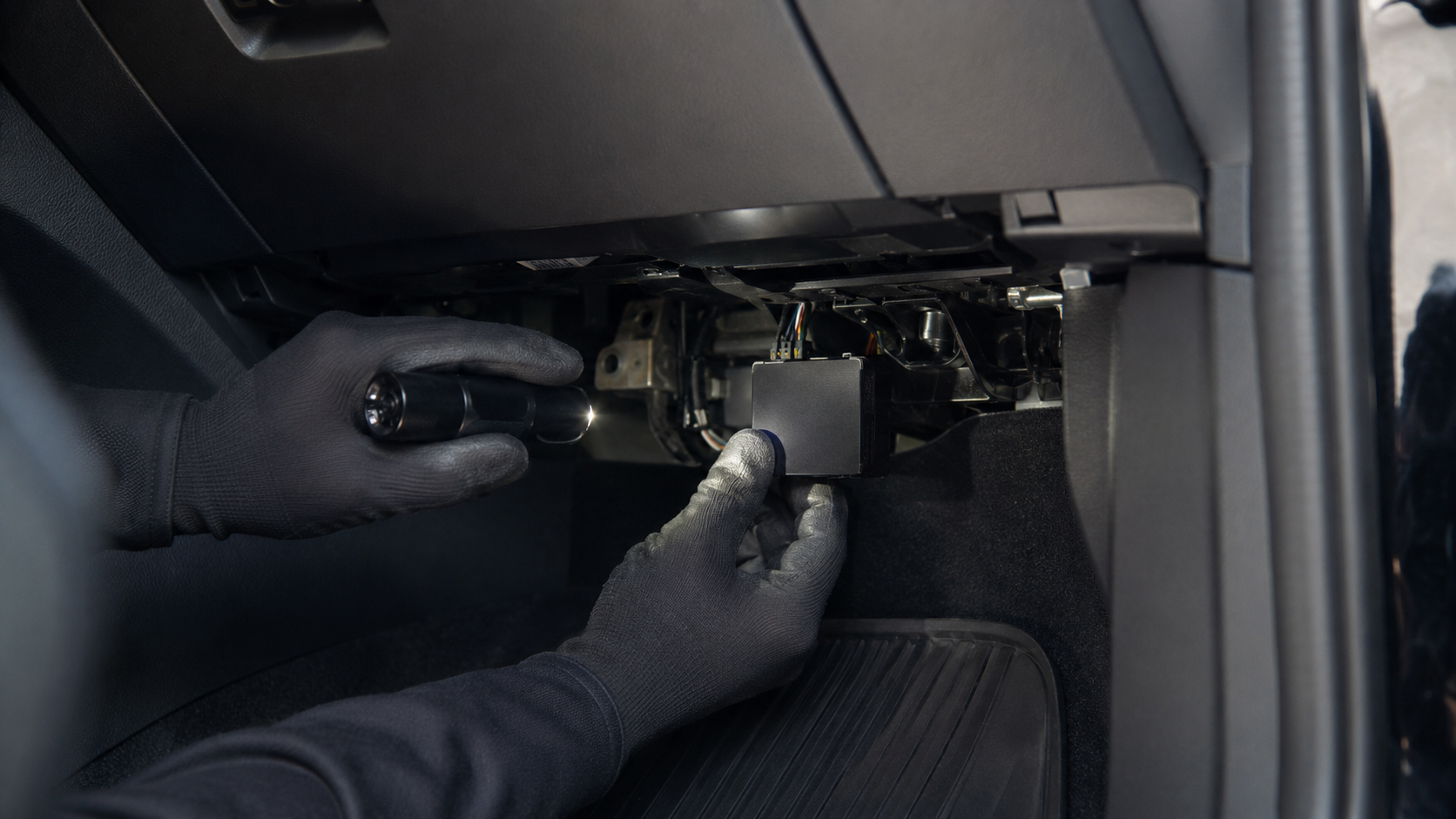
Suspicion may be raised by new wires, non-standard power splices, magnetic mounts, unknown boxes behind panels or modules whose purpose cannot be established from the car documentation. At the same time, an alarm system, an immobiliser, a dash cam, a telematics module or a tracker fitted by an insurance or leasing company may all be operating lawfully in the vehicle. Until the purpose of a device is clarified, it should not be disconnected or damaged.
The car is used for confidential trips and negotiations
Elevated risk can apply to company executives, lawyers, financial specialists, parties to corporate disputes, representatives of critical infrastructure and other people whose routes or conversations are of interest to competitors or opponents. In such cases a car check may be carried out not only after suspicions arise, but also preventively — before important negotiations, deals or a change of driver.
If you are interested specifically in an initial self-check, the basic signs and typical installation points are described in a separate article, “How to find a GPS tracker or listening device in a car”. A professional survey is needed when a car has to be checked comprehensively and you want to reduce the risk of missing a disguised or intermittently active device.
Get a consultation
A quick case assessment — no obligation
How a professional TSCM car inspection works
A car is a complex object for a technical survey. Keyless entry, Bluetooth, Wi-Fi, navigation, mobile connectivity, the alarm system, sensors and dozens of electronic control units all operate inside it at the same time. That is why an ordinary radio-signal indicator or a phone app may react to factory equipment without explaining which source has been detected or whether it poses a threat.
Clarifying the circumstances and defining the threat model
Before the check begins, the specialist establishes which events prompted the request, who had access to the car, when the suspicions appeared and which systems were fitted as extras. This helps identify the most likely tracking methods: a standalone tag, a powered GPS/GSM tracker, an audio recording device, a data transmission module or interference with an existing telematics system.
This approach matters because different devices behave differently. One tracker may transmit coordinates continuously over the mobile network, another may accumulate data and connect in short sessions, while a standalone voice recorder produces no radio signal at all while recording.
Physical inspection of the car
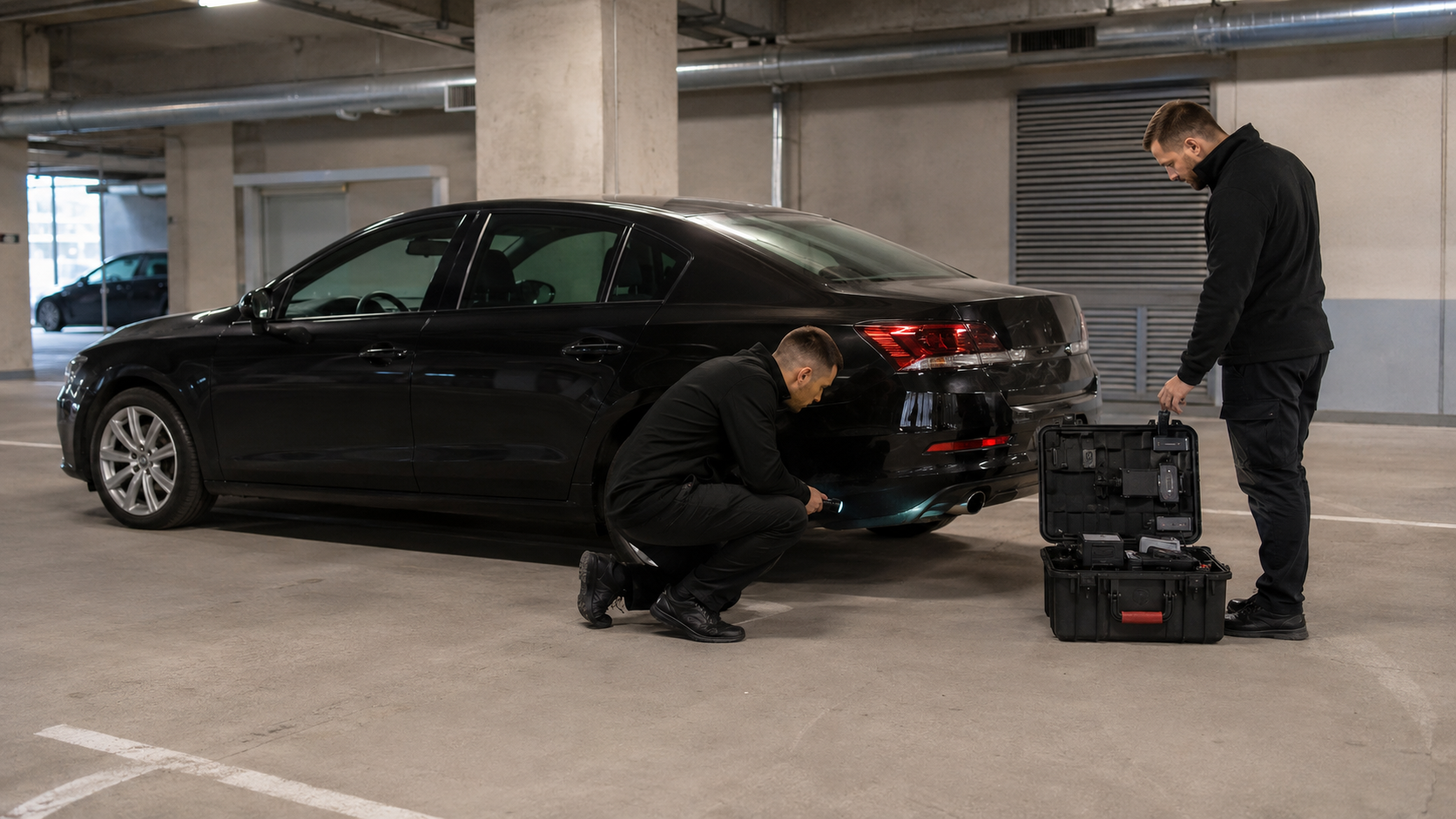
During the inspection, specialists check the accessible areas of the cabin, the luggage compartment, the space under the seats, the panels, the fuse box areas, the zones around factory connectors, the engine bay and the exterior body elements. Particular attention goes to foreign mounts, fresh traces of disassembly, non-standard wiring, additional power sources and objects that do not match the car’s specification.
The inspection is carried out carefully so as not to damage factory systems or destroy potential evidence. Not every unknown module is a bug: it may be part of the alarm system, the parking sensors, a fleet management system or previously installed add-on equipment. What matters is therefore not only the find itself, but also correct identification of its functions, power supply and method of transmitting data.
Analysis of the radio environment and wireless signals
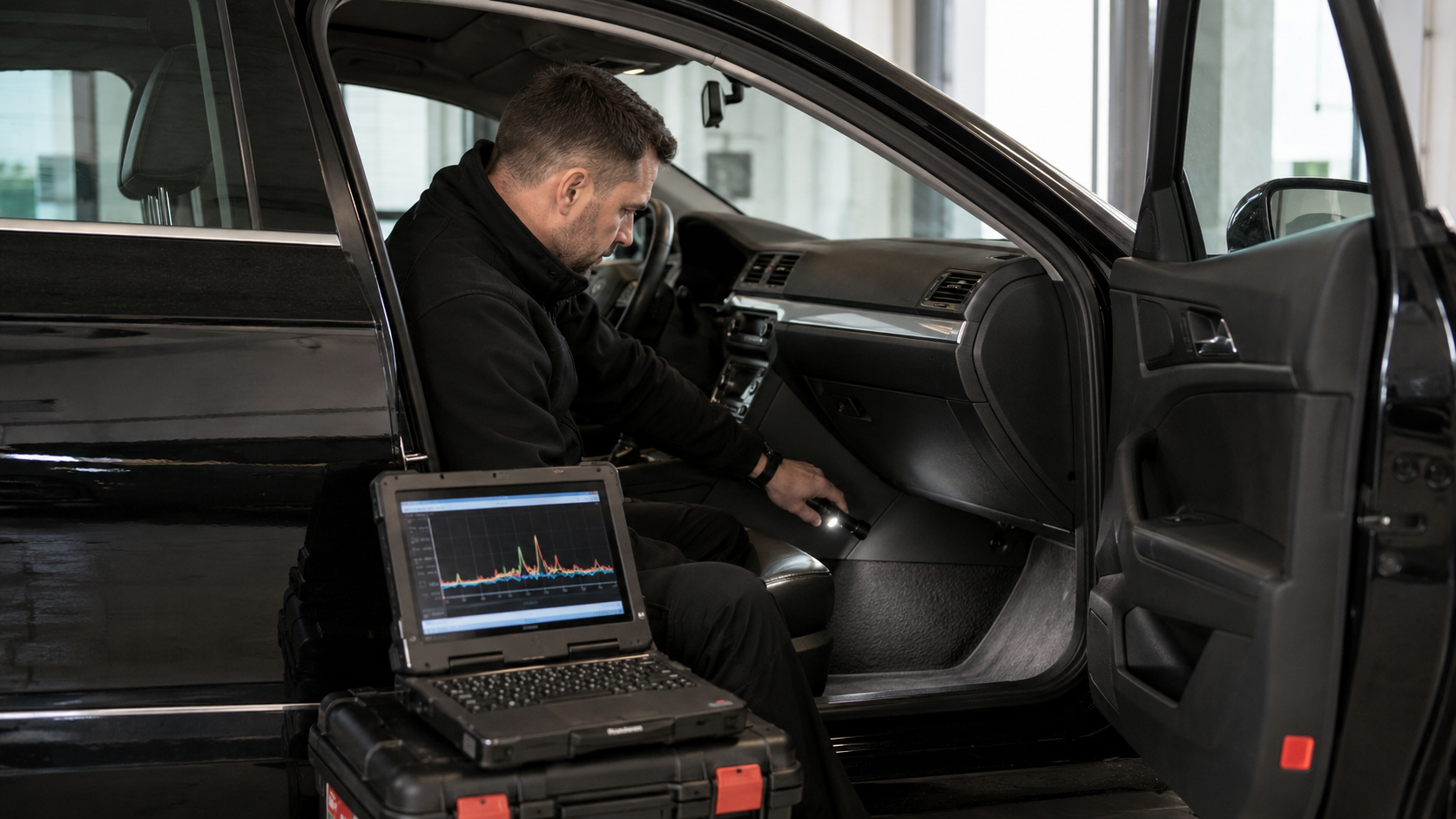
A radio-frequency check analyses activity in the bands that may be used to transmit audio, coordinates or technical data. The specialist separates the signals of factory equipment, smartphones and the surrounding infrastructure from atypical activity that may be linked to a hidden device.
A single scan does not always give the full picture. A device may become active only while the car is moving, after the engine starts, on an operator’s command or at set intervals. The mode of the check is therefore chosen with the design of the car and the presumed type of threat in mind.
Checking electronic modules and digital traces
If a suspicious electronic component is found, specialists check its markings, the way it is connected, its power supply, its interfaces and its possible communication channels. The accessible settings of the multimedia system, the list of paired Bluetooth devices, unknown access points and other digital traces may be analysed separately. The scope of such a check depends on the make of the car, the equipment installed and the agreed scope of work.
Recording the results and recommendations
Following the survey, the client receives information about the areas checked, the devices or suspicious elements found and the recommended next steps. If no signs of unauthorised equipment are found, this means that no such objects were detected within the methods applied and the areas available for inspection. A professional conclusion should not contain unfounded guarantees that no threats whatsoever exist.
What to do after finding a GPS tracker, bug or other device
A suspicious device should not be broken, switched off or thrown away straight away. Hasty action can destroy traces of the installation, data held in memory, hardware identifiers or information needed to establish how data was transmitted. Beyond that, abruptly cutting the device off may tell whoever controls it that the surveillance has been discovered.
Document the device before removing it
First of all, record the general view of the place where the device was found, its position, the way it was mounted, the wires connected to it, its markings and serial numbers. It is best to take photographs that make clear exactly where the object was and how it was installed. If the situation may have legal consequences, it is advisable to agree further steps with a lawyer and with the specialist who will carry out the technical examination.
Do not try to examine the electronics yourself
Connecting an unknown module to a computer, putting its SIM card into a phone or trying to log into its account can alter digital data and complicate any further analysis. If the device is intended to be used as evidence, it is important to preserve its state and document the handover to a specialist. In the event of a direct threat to life, stalking or another dangerous situation, contact law enforcement.
Check more than just the car
Finding a tracker or a bug may point to a broader threat. After checking the car, it is worth assessing the security of your smartphone, your accounts, location access, shared family profiles, cloud services and the manufacturer’s car apps. Information about routes sometimes reaches third parties not through a physical device in the car, but through a compromised account or excessive permissions.
Professional car checks by ProDefence
A self-inspection helps you notice an obvious foreign object, but it does not rule out disguised or intermittently active equipment. Searching for bugs in a car requires an understanding of its factory electronics, analysis of the radio environment and correct identification of every suspicious component.
ProDefence specialists carry out comprehensive TSCM checks of cars for GPS trackers, Bluetooth tags, hidden microphones, recording devices and other unauthorised means of obtaining information. The survey is performed confidentially, taking into account the specific situation, the model of the car and the likely tracking methods. We work in Kyiv and arrange on-site car checks in other cities across Ukraine.
If you have noticed signs of tracking, keep receiving alerts about an unknown tag, or want to check your car before important negotiations, contact ProDefence. We will assess the circumstances first, define the format of the survey required and propose a practical inspection plan without unfounded promises or unnecessary interference with the car.
Car check
Need a professional car check for tracking?
ProDefence will carry out a TSCM survey of your car for GPS trackers, tags and hidden modules in Kyiv and on-site across Ukraine.
Confidential. Without unnecessary interference with factory systems.


