



An attorney request to the Migration Service can be used to obtain information and copies of documents from the State Migration Service of Ukraine (DMS) that are necessary to protect a client’s rights. It may be required to establish the status of a residence permit or passport application, obtain materials from a migration file, review the grounds for a refusal, or clarify information concerning citizenship, immigration, forced return or an entry ban.
It is important to identify the correct government authority. The State Migration Service of Ukraine and the State Border Guard Service of Ukraine have different powers. For example, official information about an actual crossing of the state border should be requested from the SBGS, not the DMS. Addressing the wrong authority may result in the request being forwarded, a merely formal response, or lost time.
Short answer: requests concerning passport documents, citizenship, immigration, residence permits, refugee status and decisions of migration authorities should be sent to the DMS. If confirmation of departure from Ukraine, dates of entry or a border crossing is required, the Administration of the State Border Guard Service will generally be the correct recipient. The attorney first determines where the relevant information is held, formulates specific questions and attaches the documents required by law.
Below, we explain what can be obtained through an attorney request, which documents must be attached, how long a response takes, and what to do if the authority refuses the request or states that it does not hold the requested information.
What can be obtained through an attorney request to the DMS of Ukraine
Under Article 24 of the Law of Ukraine “On the Bar and Practice of Law”, an attorney request is a written application by an attorney seeking information and copies of documents necessary to provide legal assistance to a client. A request may be sent to a public authority, local government body, their officials, an enterprise, institution, organisation or another recipient specified by law.
This is not an ordinary letter asking an authority to “look into the situation”. In a properly prepared request, the attorney connects specific information with the subject of the legal assistance, identifies the appropriate information holder, and asks for existing documents or data in a clear form.
Matters within the competence of the Migration Service
The official areas of responsibility of the State Migration Service of Ukraine include passport documents, Ukrainian citizenship, immigration, documentation of foreign nationals and stateless persons, residence permits, and matters concerning refugees and complementary protection. Depending on the case, an attorney request to the Migration Service may concern:
- the status of an application for a Ukrainian domestic passport or international passport;
- the reasons for a delay in producing or issuing a passport document;
- information about a submitted application form and the movement of documents between departments;
- materials from an immigration permit file;
- the issue, replacement, extension or cancellation of a temporary or permanent residence permit;
- the grounds for a decision refusing to issue a document;
- copies of decisions, notices, opinions and other materials concerning the client;
- the consideration of documents concerning the acquisition, confirmation or termination of Ukrainian citizenship;
- decisions on the forced return of a foreign national or stateless person;
- the existence of an entry-ban decision, where that decision was made by the DMS;
- materials concerning recognition as a refugee or a person in need of complementary protection;
- archived information and copies of documents from a migration file, where held by the relevant department.
A request to “provide all information about the person” is too broad. A more effective request identifies a particular document, decision, period or procedure. For example, it may ask for a copy of a refusal decision, its date, the date and method by which it was sent to the applicant, and copies of the documents on which the decision was based.

DMS or SBGS: where to send the request
Some unsuccessful requests result from confusion between the Migration Service and the Border Guard Service. The subject of the request should determine the correct recipient:
Issue of a passport or ID cardDMS or the relevant territorial department
Temporary or permanent residence permitDMS
Citizenship, immigration or refugee statusDMS, within its competence
Date of entry, departure or crossing of the state borderSBGS
Materials relating to an entry-ban decisionThe authority that initiated or made the relevant decision
Information about a wanted-person notice, criminal proceedings or a procedural restrictionThe relevant law-enforcement or procedural authority
In a particular case, information may be distributed among several authorities. For example, an entry-ban decision may involve an authority other than the DMS. Before sending the request, it is therefore necessary to establish which authority made the decision and who holds the related materials. If you specifically require proof of a border crossing, see how to obtain information from the SBGS.
Information that cannot be obtained through an attorney request
An attorney request does not provide unlimited access to government databases. The law does not require an information holder to disclose restricted information, or documents containing such information, without an appropriate legal basis. This applies in particular to third-party personal data, confidentiality of an investigation, state secrets and information governed by special legislation.
An attorney request also cannot compel an authority to:
- create a new document that did not exist when the request was received;
- conduct special research or provide legal advice to the attorney;
- make a favourable decision on a residence permit, citizenship or another administrative service;
- alter a statutory procedure requiring an application to be submitted in person;
- disclose another person’s data merely because it may be useful to the client.
An attorney request is a means of obtaining evidence and information, not a substitute for an application for an administrative service. If the client needs a passport, residence permit or immigration permit, the request can clarify the circumstances and obtain relevant materials, but it does not replace the actions that the applicant is legally required to take.
How an attorney request differs from an individual petition
An individual petition and an attorney request have different legal bases, content and response periods. Through the DMS electronic reception service, an individual may ask a question, submit an application or make a complaint. An attorney request is made in the course of providing professional legal assistance and is used to obtain specific information or copies of documents.
In some cases, several mechanisms should be used at the same time: an attorney request to obtain materials, an individual petition to resolve an administrative issue, and a complaint to challenge inaction or a decision. The appropriate combination depends on the client’s objective.
Get a consultation
A quick case assessment — no obligation
How to submit an attorney request to the Migration Service correctly
The outcome does not depend solely on citing the law. The DMS must understand exactly what information the attorney is requesting, which department may hold it, and why the request relates to legal assistance for a particular client. Overly general or contradictory wording increases the risk of a merely formal response.
Documents attached to an attorney request
The attorney must attach attorney-certified copies of:
- the certificate authorising the attorney to practise law;
- the warrant, or an authorisation from a body or institution empowered by law to provide free legal aid.
The law prohibits requiring other documents as mandatory attachments specifically to an attorney request. However, whether to provide a copy of the client’s passport, the client’s written consent, a previous DMS decision or another document should be considered separately. Such materials may be needed not to prove the attorney’s status, but to identify the person accurately and demonstrate a lawful basis for processing their personal data.
What the request should contain
A well-prepared attorney request will usually contain:
- Attorney details. Full name, certificate details, business address and contact details.
- Client details. Full name, date of birth, citizenship, passport details and other identifiers required to locate the file.
- Subject of the legal assistance. A concise description of the matter without disclosing unnecessary confidential information.
- Specific information requested. Each question should preferably be set out as a separate numbered item.
- Relevant period. This is particularly important for archived materials and border-crossing information.
- Preferred response format. Electronic copies, paper copies, certified documents or a written information response.
- Legal basis. A reference to the Law of Ukraine “On the Bar and Practice of Law” and other provisions relevant to the particular matter.
- List of attachments. A copy of the certificate, the warrant and, where necessary, identification documents.
Do not combine dozens of different demands in one sentence. If a copy of the decision, the case materials and information about the dispatch of a notice are all required, they should be listed separately. This makes it harder for the official to overlook part of the request and easier for the attorney to assess whether the response is complete.
How to identify the correct DMS department
Sending the request to the central office is not always the fastest option. If an application form or migration file was considered by a territorial department, the relevant documents may be held there. Before submission, check:
- where the client submitted the original application;
- which authority made the challenged decision;
- whether the file was transferred to another region or to the central office;
- whether the relevant department is operating under martial-law conditions;
- which address for incoming correspondence is published on the official DMS website.
If the recipient does not hold the information, it may state this or forward the request to the appropriate authority where there is a legal basis to do so. Forwarding, however, takes time. ProDefence therefore reconstructs the history of the document submissions before identifying the recipient.
How to send the request: by post or electronically
The most predictable method remains sending a paper request by registered post with an inventory of enclosures and proof of delivery, or submitting it through the authority’s registry office. This records the date of receipt and the documents enclosed.
An electronic document may be sent through the authority’s official channels, subject to the requirements for electronic signatures and document formats. Contact details and correspondence procedures should be checked immediately before submission because addresses and administrative rules may change. The official DMS website lists separate channels for individual petitions and incoming correspondence, including attorney requests.
How long an attorney request takes
The general time limit for responding to an attorney request is no more than five working days from receipt. If the request concerns a substantial volume of information or requires a search through a large amount of data, the period may be extended to twenty working days.
The authority must notify the attorney of an extension in writing, explain the reasons, and do so no later than five working days after receiving the request. A bare reference to a “heavy workload”, without explaining the scope of the search, may not constitute adequate justification.
If the response requires copying or printing more than ten pages, the attorney must reimburse the actual costs in the manner and amount prescribed by legislation on access to public information. The authority must notify the attorney of the required payment rather than simply refuse to provide the materials.
What to do if the DMS does not respond or refuses
A refusal is not necessarily unlawful. The first step is to determine its reason: the information does not exist, the request was sent to the wrong authority, the data is restricted, the question was framed too broadly, or the attorney is effectively asking the authority to create a new document.
After reviewing the response, the available steps may include:
- clarifying the request and narrowing the period or list of documents;
- sending the request to the correct information holder;
- submitting a further request that explains the legal basis for access;
- making a complaint about inaction or an incomplete response;
- raising the issue of liability for an unlawful refusal or the late or incomplete provision of information;
- applying to the administrative court if the violation cannot be remedied out of court.
To challenge the response, it is important to retain evidence that the request was sent, its date of receipt, the complete set of attachments and the unaltered response. A telephone conversation with the department may help resolve administrative matters, but it is not a substitute for documentary evidence.
How to obtain confirmation of departure from Ukraine and a border crossing
The phrase “an attorney request to the Migration Service for confirmation of departure from Ukraine” is imprecise. Actual crossings of the state border are recorded in the border-control system, so information about entry and departure should be requested from the State Border Guard Service of Ukraine.
The DMS issues passport documents for travel abroad, but the SBGS records the actual use of a passport to cross the border. If a request is sent only to the Migration Service, the response may not contain the required dates, or the applicant may be advised to contact another authority.
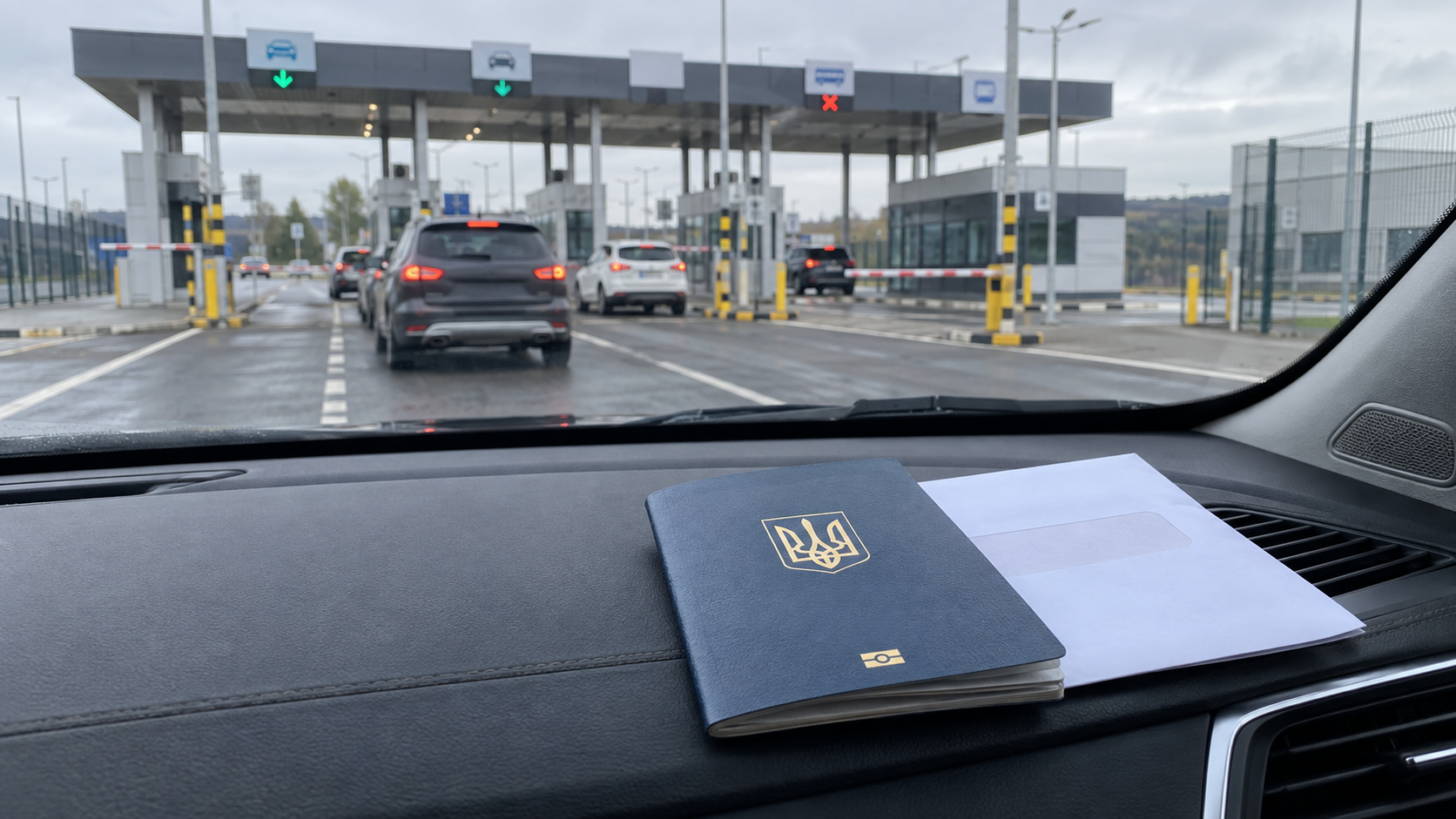
When official confirmation of departure is required
A certificate or official response concerning a border crossing may be needed if the passport has no corresponding stamp or a foreign authority asks for proof of the date of departure from Ukraine. In practice, this information may be used for:
- applying for or confirming temporary protection in a European country;
- confirming the date of arrival and lawful stay abroad;
- applying for social benefits, insurance or a right of residence;
- tax, family, inheritance or court proceedings;
- confirming a person’s absence from or presence in Ukraine during a particular period;
- reconstructing travel history after the loss of a passport or other documents.
Before preparing the request, establish the requirements of the particular institution abroad. One authority may accept an official SBGS response with a translation, while another may require a paper original, a certified translation or additional confirmation. There is no universal set of documents for every country and procedure. Related guidance: what to do if there is no exit stamp and how to obtain confirmation while abroad.
Information required to search for records
To enable the SBGS to identify the person and locate the relevant records, the request should include:
- full surname, first name and patronymic, including any previous surnames;
- date of birth and citizenship;
- details of any domestic and international passports the person may have used;
- the approximate or exact date of entry or departure;
- the period for which information is required;
- the direction of crossing and checkpoint, if known;
- the purpose for obtaining the information and the preferred response format;
- a current correspondence address and email address.
If the person used several passports, lost a document or changed their surname during the relevant period, this should be stated. Otherwise, differences in identification data may cause some records to be omitted from the response.
What an SBGS response may contain
Depending on the request and the data available in the system, an official response may contain the dates of border crossings, direction of travel, checkpoint and document used to identify the person. The precise scope of the response depends on the requested period, technically available records and statutory restrictions.
Three distinct things should be distinguished:
- Passport stamp — a physical mark that may be absent.
- Border-control system record — electronic information that may be retained independently of any stamp.
- Official response or certificate — a document issued by the authority on the basis of the available records.
An official response can document the relevant circumstances when the passport alone is insufficient. It does not, however, displace a foreign authority’s requirements concerning translation, document format or recency.
Can confirmation be obtained while abroad?
A client’s presence outside Ukraine does not itself prevent an attorney from preparing and sending a request. The legal-services agreement and exchange of documents may be arranged remotely, subject to legal requirements and client-identification rules.
This is particularly relevant when the document is needed for temporary protection, a migration procedure or a social-services authority and the person cannot travel to Ukraine. The attorney establishes which document the foreign authority will accept, identifies the recipient, prepares the request and, after receiving the response, helps assemble the documents for their intended use.
How ProDefence assists with obtaining information
ProDefence Attorneys’ Association does more than send a template letter. Before preparing an attorney request, we establish the client’s ultimate objective and identify which authority holds the required data. This helps avoid situations where a request is sent to the DMS even though the relevant information is held by the SBGS, or where the client receives a document that is unsuitable for submission abroad.
Our assistance may include:
- analysing the circumstances and available documents;
- identifying the correct authority and specific department;
- preparing a precise list of the information requested;
- preparing and sending the attorney request;
- monitoring the response deadline;
- legally assessing the information provided or the reasons for refusal;
- preparing a further request, complaint or other documents where necessary;
- advising on the subsequent use of the response in Ukraine or abroad.
This material is for information purposes. The procedure for obtaining a particular document depends on the circumstances of the case, the type of information, the authority that holds it, and the requirements of the institution to which the document will be submitted.
Attorney request to the DMS
Do you need a request to the Migration Service or official confirmation of a border crossing?
Tell ProDefence which document you need, the institution for which it is required and the relevant period. We will identify the correct recipient, prepare a legally substantiated request and assist with obtaining the response — without generic template letters or unnecessary delay.
Confidential. We work with clients in Ukraine and abroad.


